By Israa Hatem Aljaish
Participating in Conflicts of Caring was a deeply meaningful experience for me, both as a Palestinian mother from Gaza and as a researcher. It gave me the opportunity to reflect on what care means when the people we love are living through genocide, when borders and political systems stand between us and our loved ones, and when caring becomes something we struggle to practise across distance.
During my talk, I shared my experience as a mother while my daughter, Marlin, was still in Gaza. I spoke about the emotional weight of being separated from her, the uncertainty surrounding her safety, and the exhausting process of trying to secure her evacuation and navigate the visa procedures. As a mother, my most basic responsibility was to protect my child, yet I found myself in circumstances where that responsibility was shaped and restricted by borders, bureaucratic processes, and political decisions beyond my control.
This experience made me think about care not simply as an emotion or an individual responsibility, but as something deeply political. What does it mean to be a mother when you cannot physically reach your child? What happens when the ability to care depends on permissions, documents, and decisions made by institutions? And how do we continue caring when we ourselves are struggling?
I also spoke about how my PhD research has become another form of care and responsibility. As a Palestinian researcher from Gaza, my work explores how university students and graduates continue their education amid genocide, displacement, and the destruction of their universities and everyday lives. I am interested in understanding how they continue learning, and why they choose to continue, what education means to them, and how they negotiate their sense of belonging, hope, and imagined futures.
For me, this research is not simply an academic project. It is also a duty of care towards my community: to listen, to make space for people’s narratives, and to ensure that their experiences are not reduced to statistics or stories of suffering alone. It is about recognising their agency, their voices, and the meanings they give to their own lives.
What I loved most after Conflicts of Caring was the importance of coming together. Sharing experiences in a space where people are willing to listen, reflect, and stand in solidarity reminds us that care does not have to be carried individually. Such gatherings create opportunities to connect personal experiences with collective responsibilities, and to transform feelings of helplessness into meaningful solidarity.
I hope we continue creating these spaces, where Palestinian voices can be heard, where difficult conversations can take place, and where care is understood not only as compassion, but also as a continuing commitment to one another.
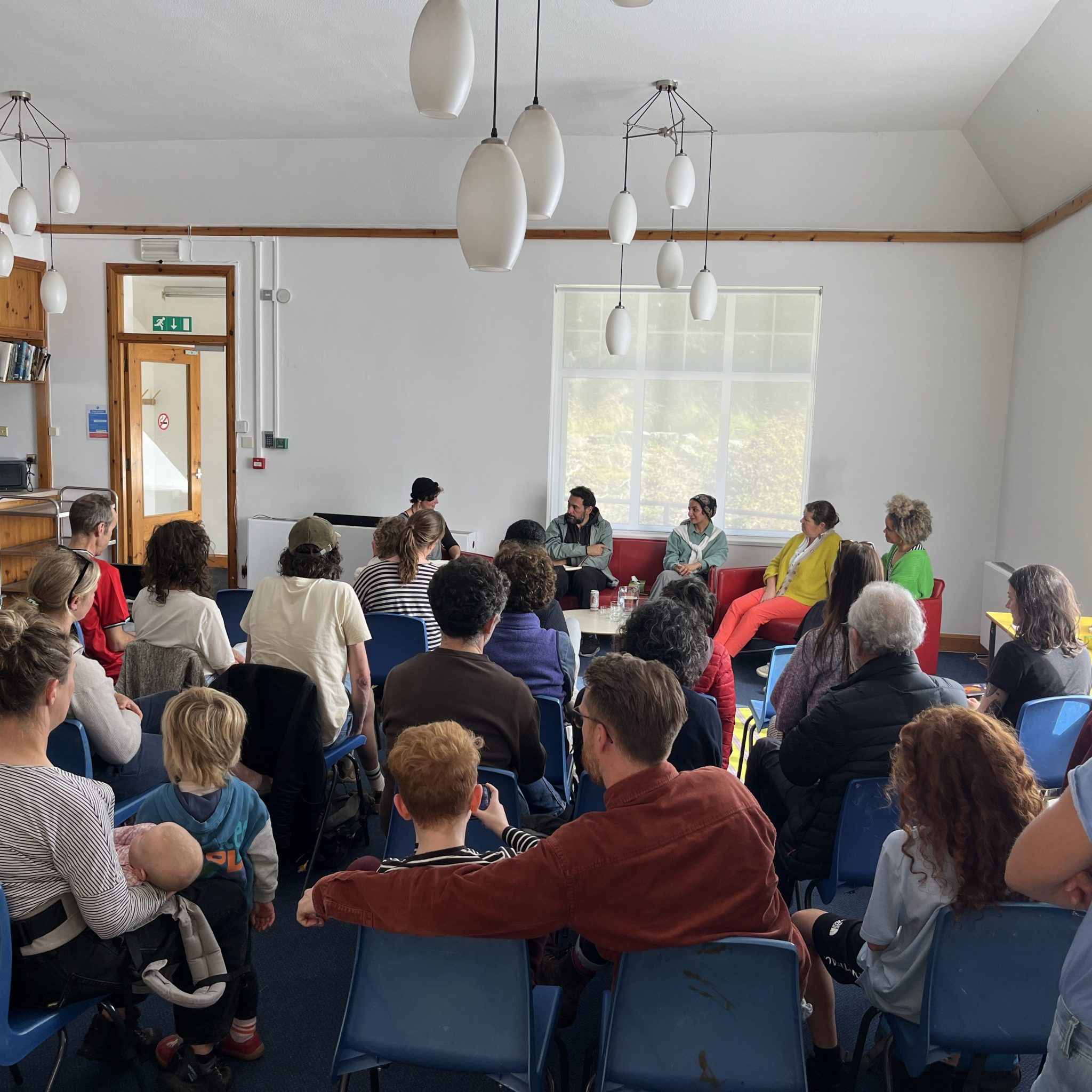
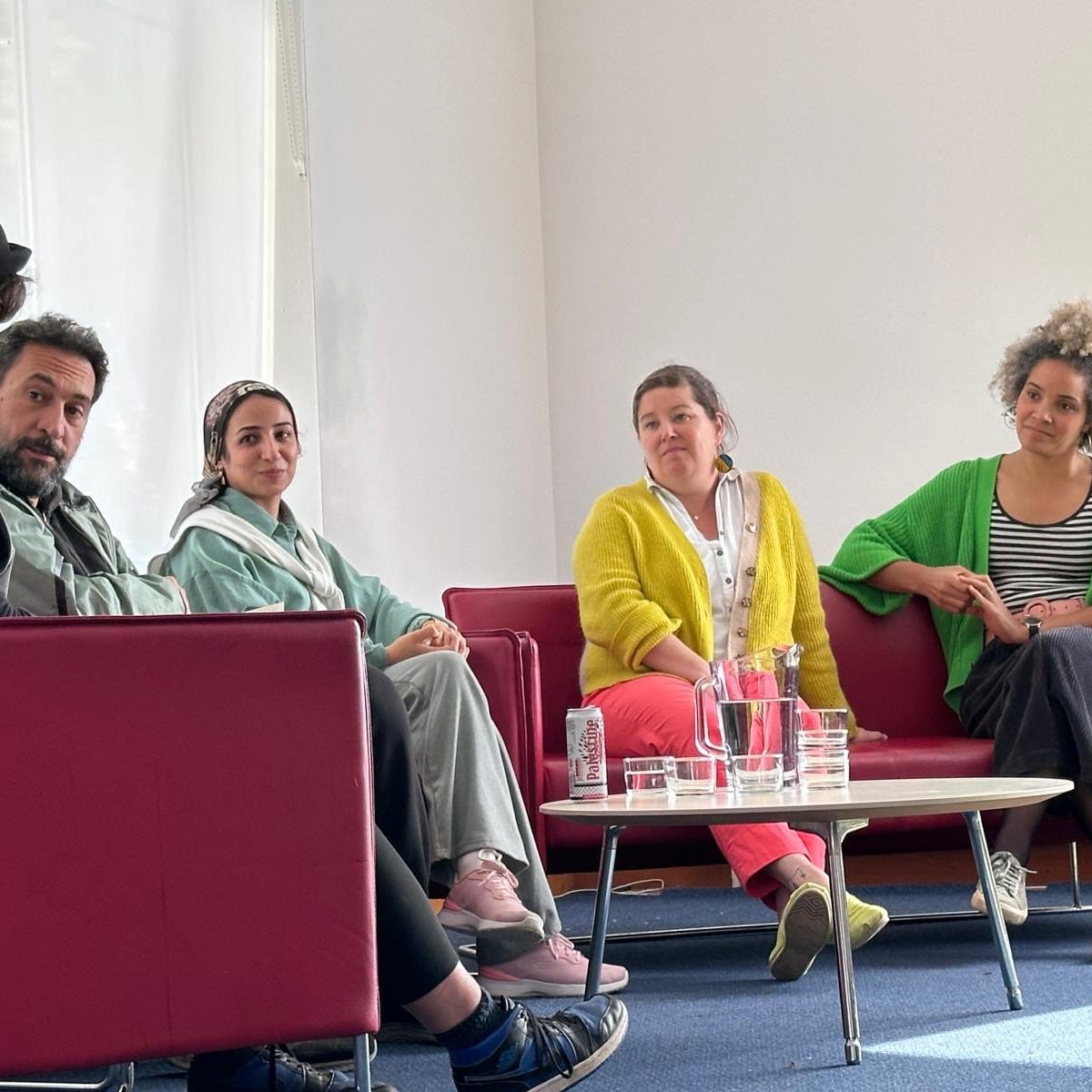
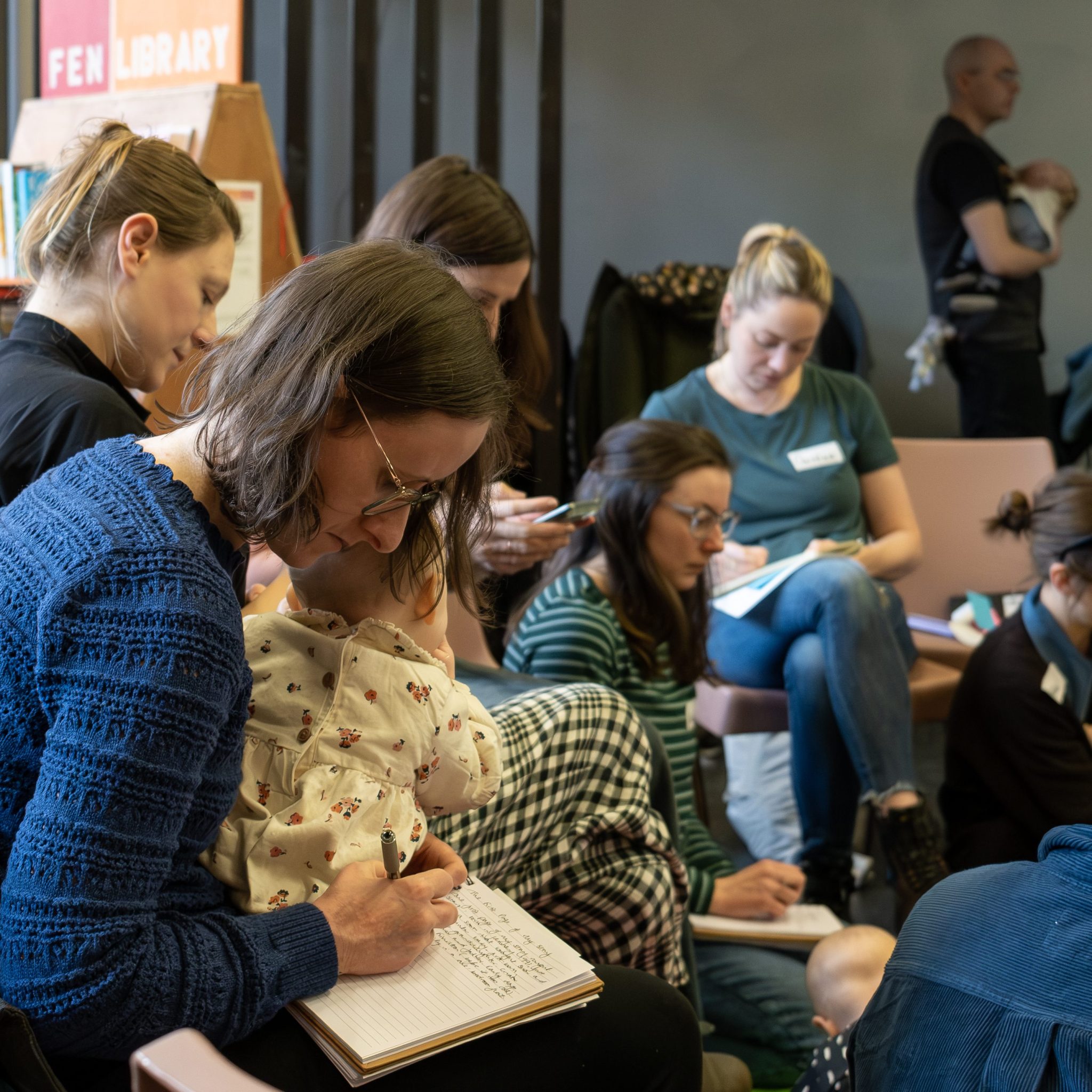
Israa shared her experiences of life in Gaza at our Conflicts of Caring event, with M/Others Against Genocide in September.
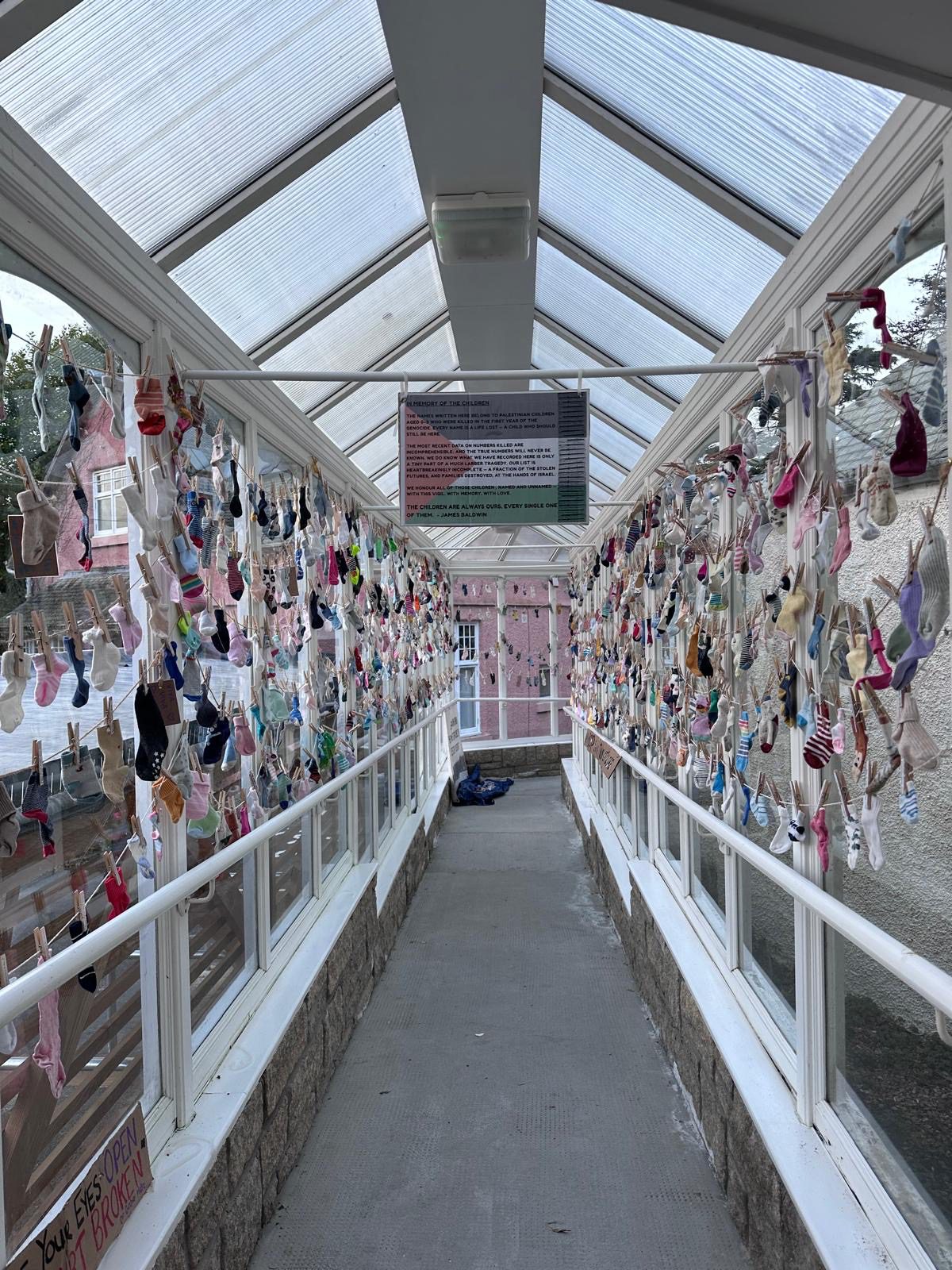
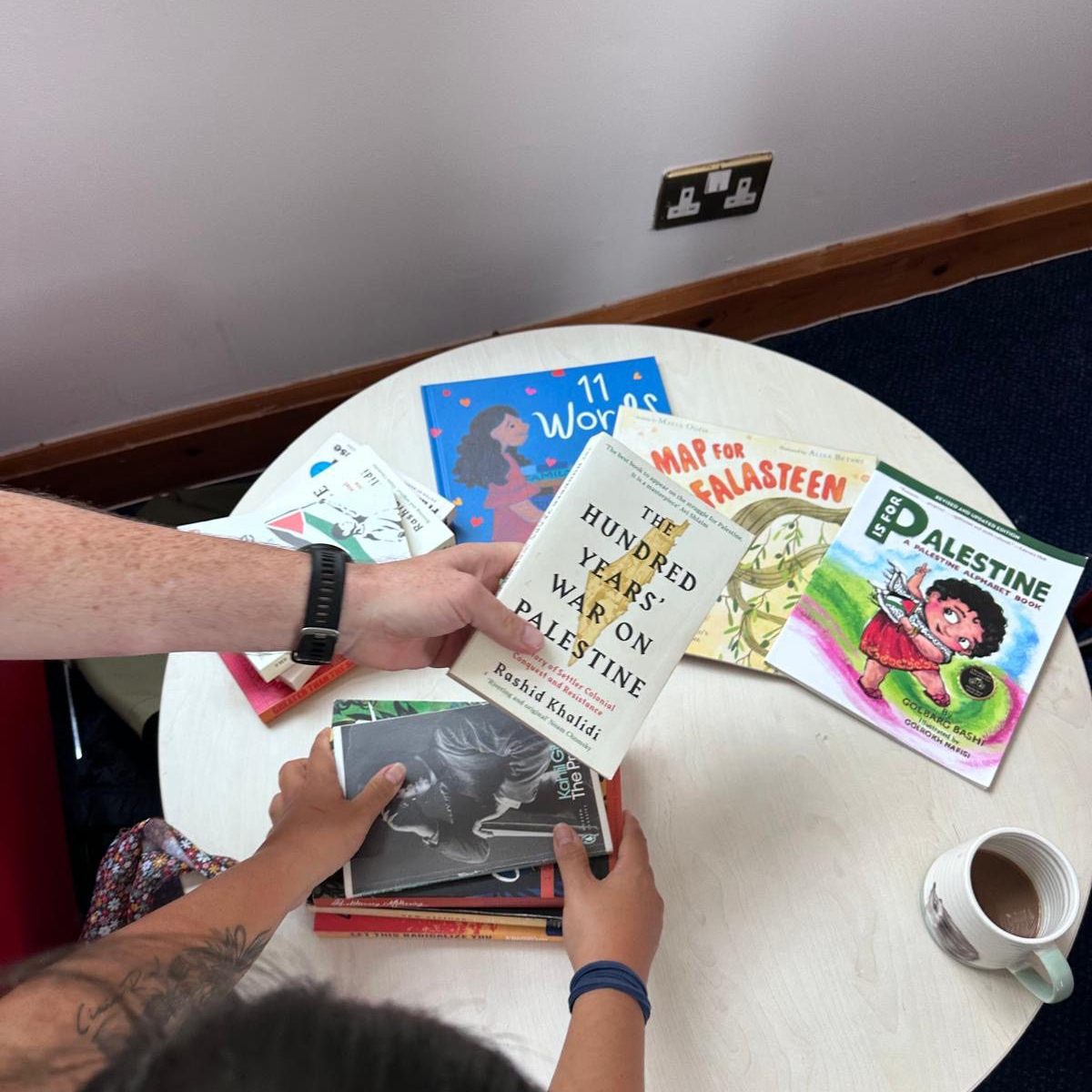
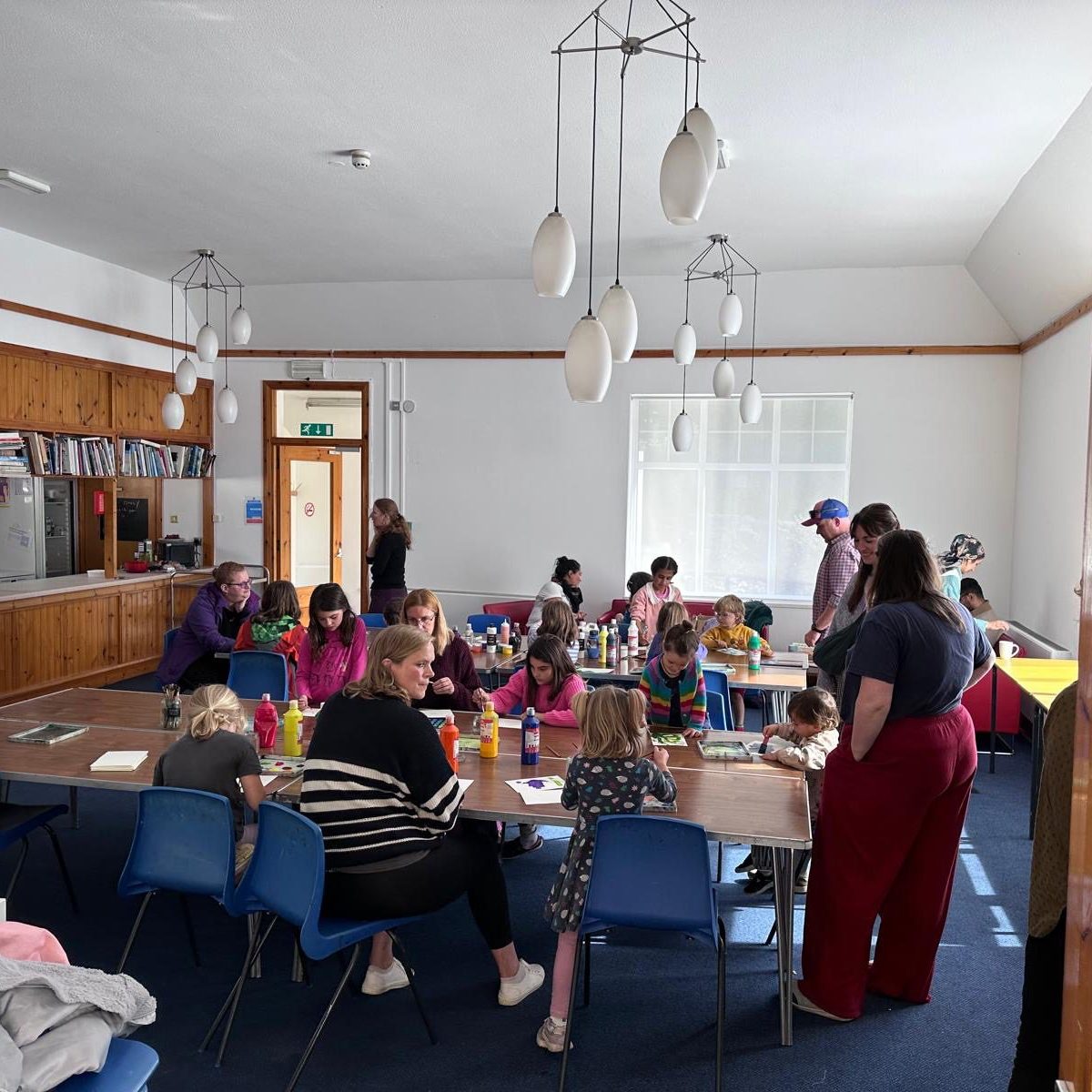
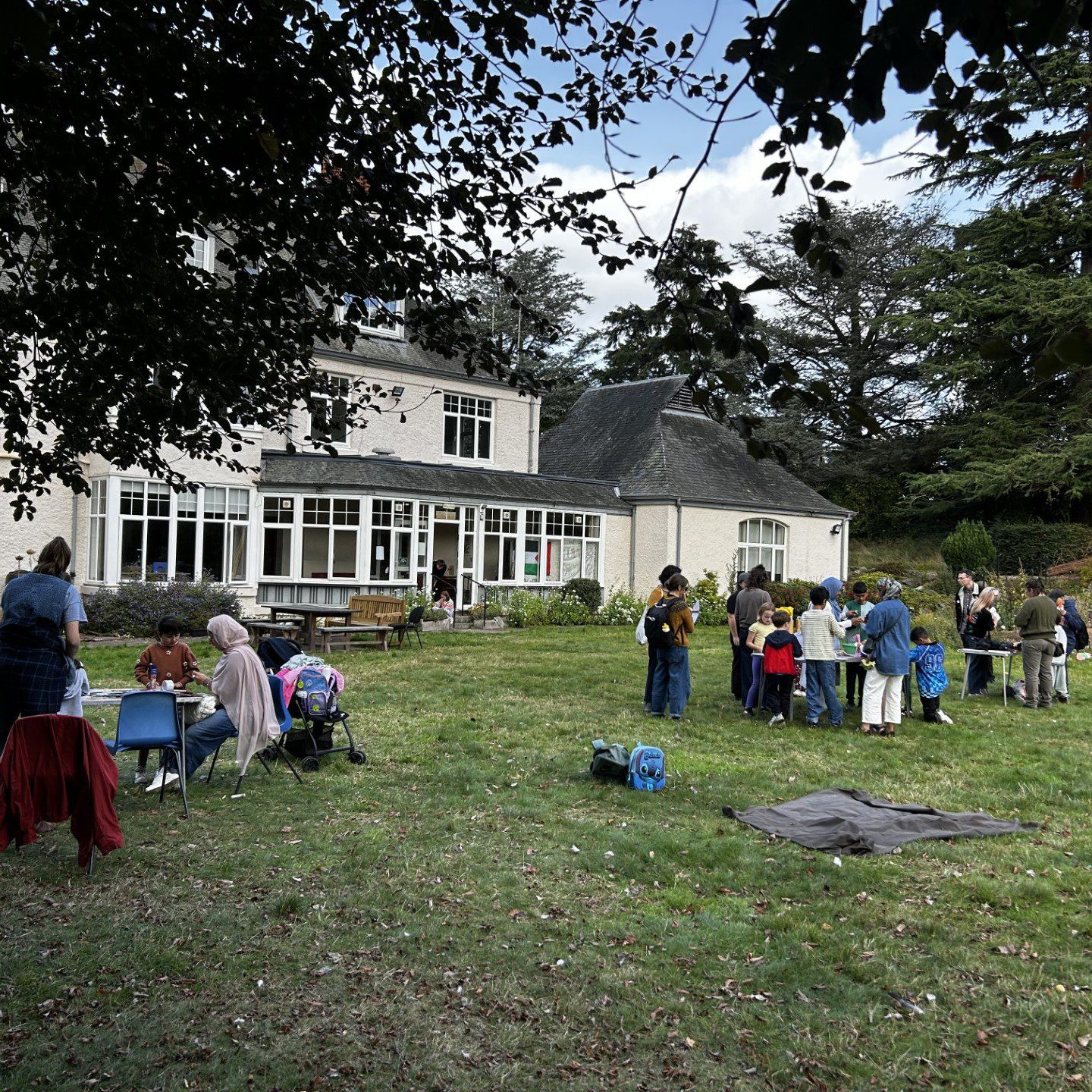
In September we were thrilled to host part of the Falastin Film Festival at Forgan Arts Centre.
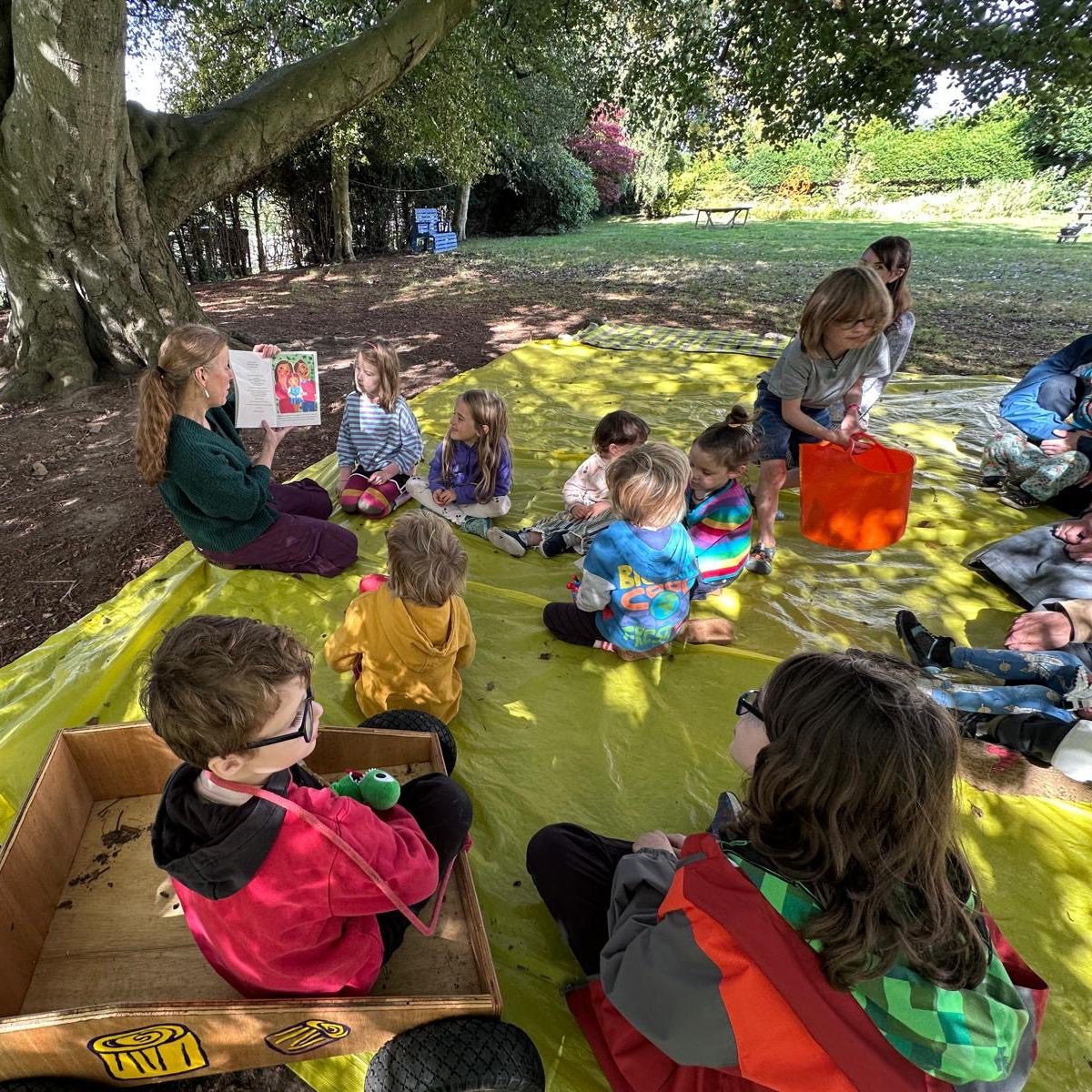
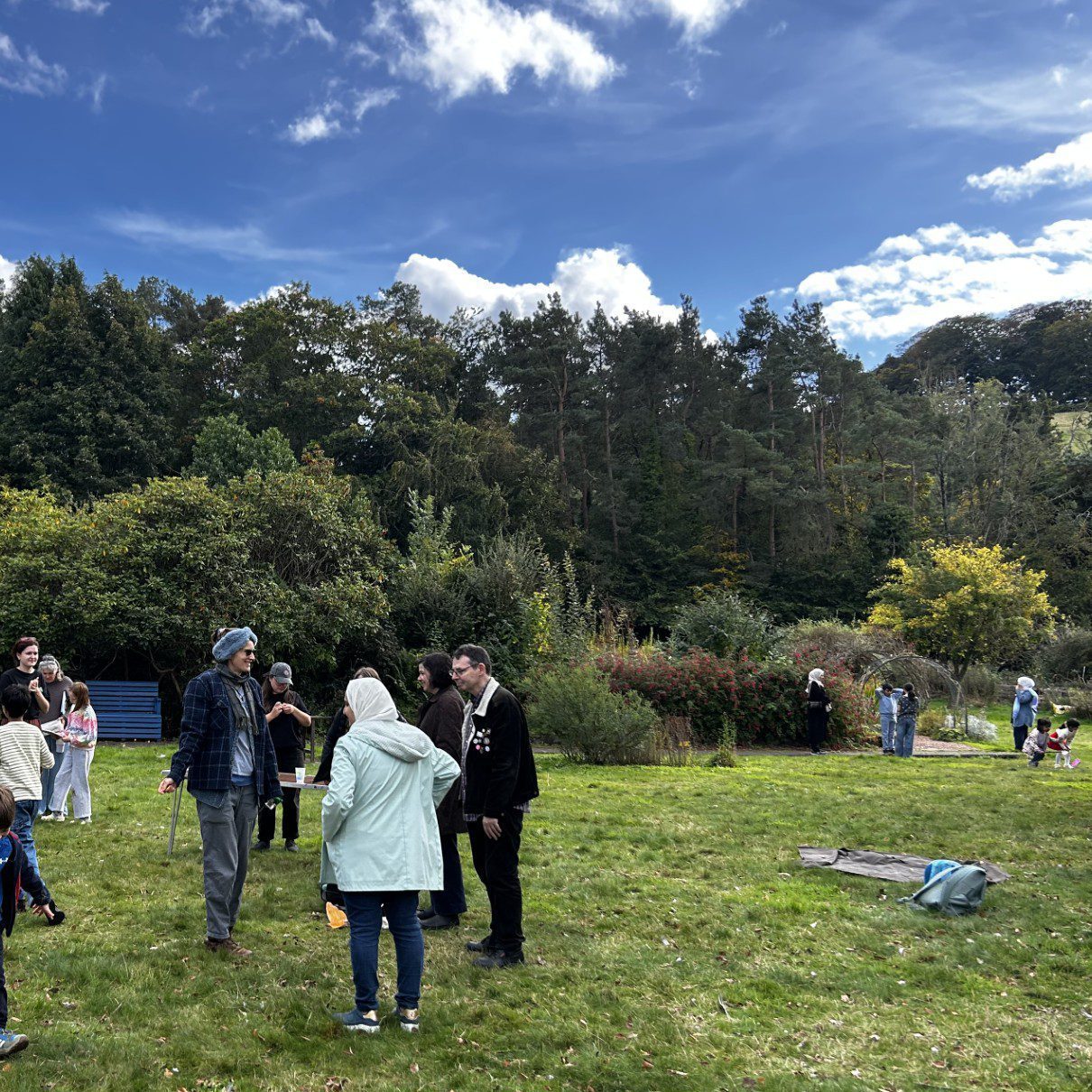
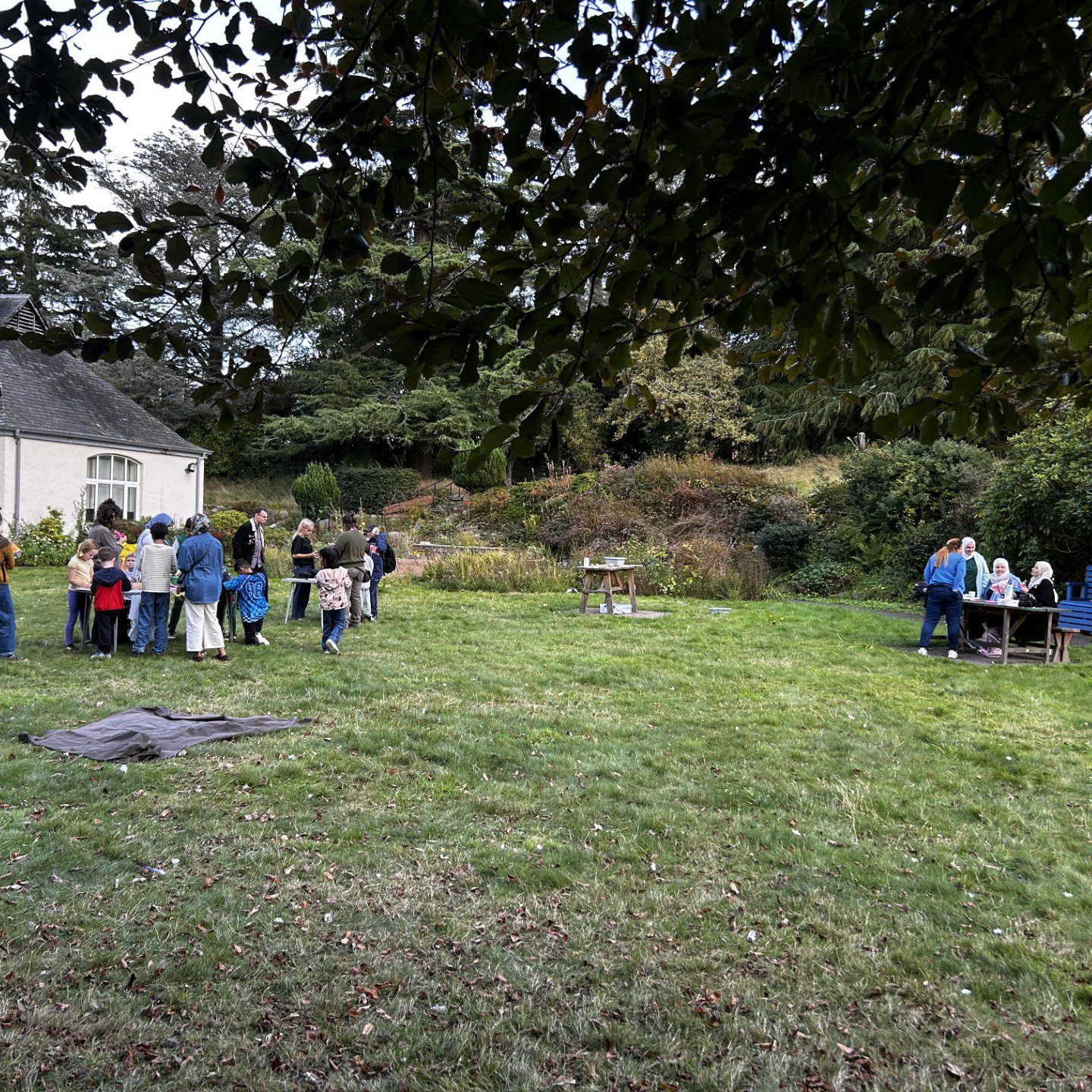
During the day, families were invited to join us for Birds of Palestine, a day of family friendly film screenings and activities in the garden in partnership with ScrapAntics Family Club, The Dundee Feminist Bird Club and Artworkers for Palestine Dundee.
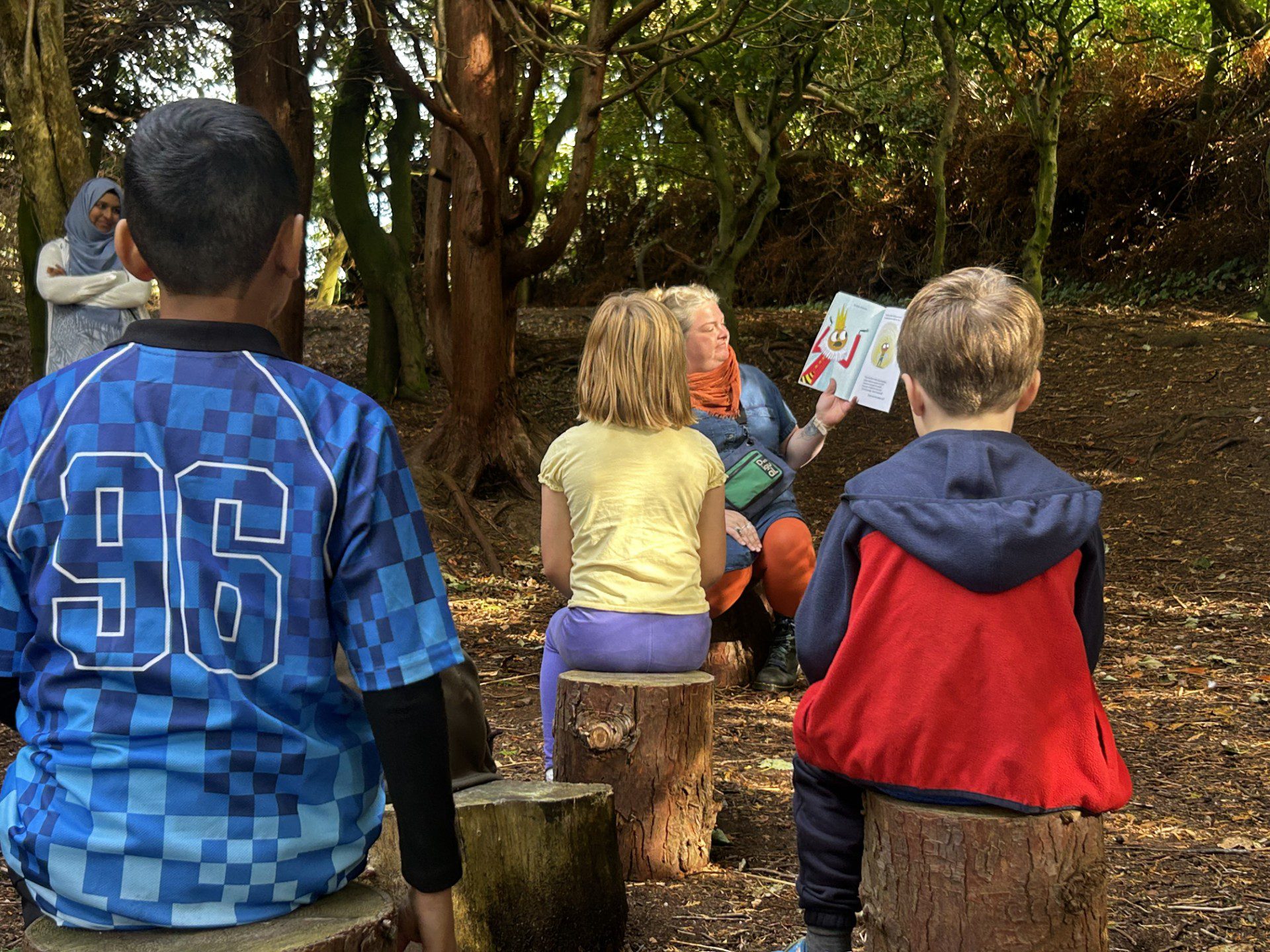
We spent the afternoon exploring the garden, hunting for bugs and birds that we could see living there, learning about their lives and habitats and learning about patterns of migration between Scotland and Palestine.
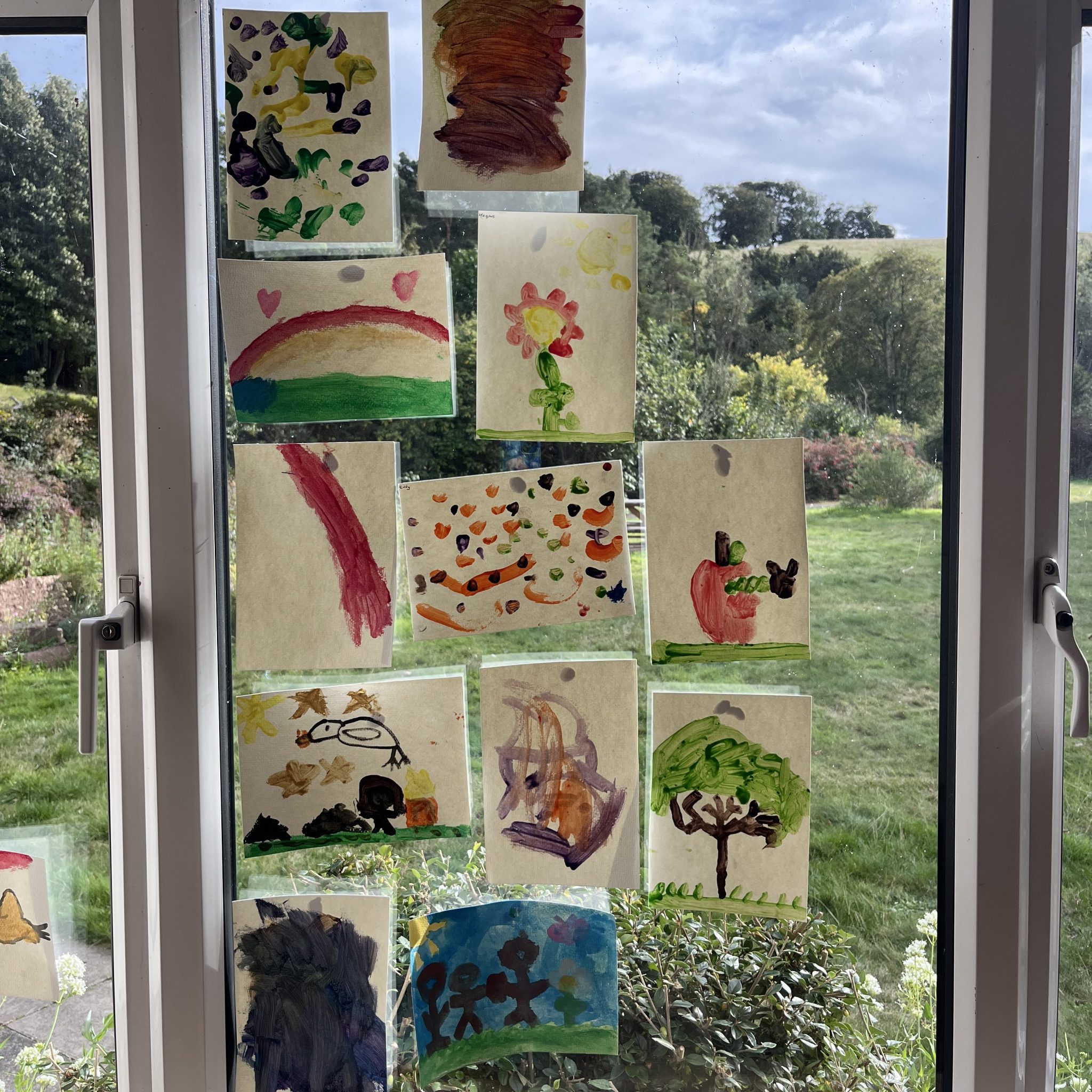
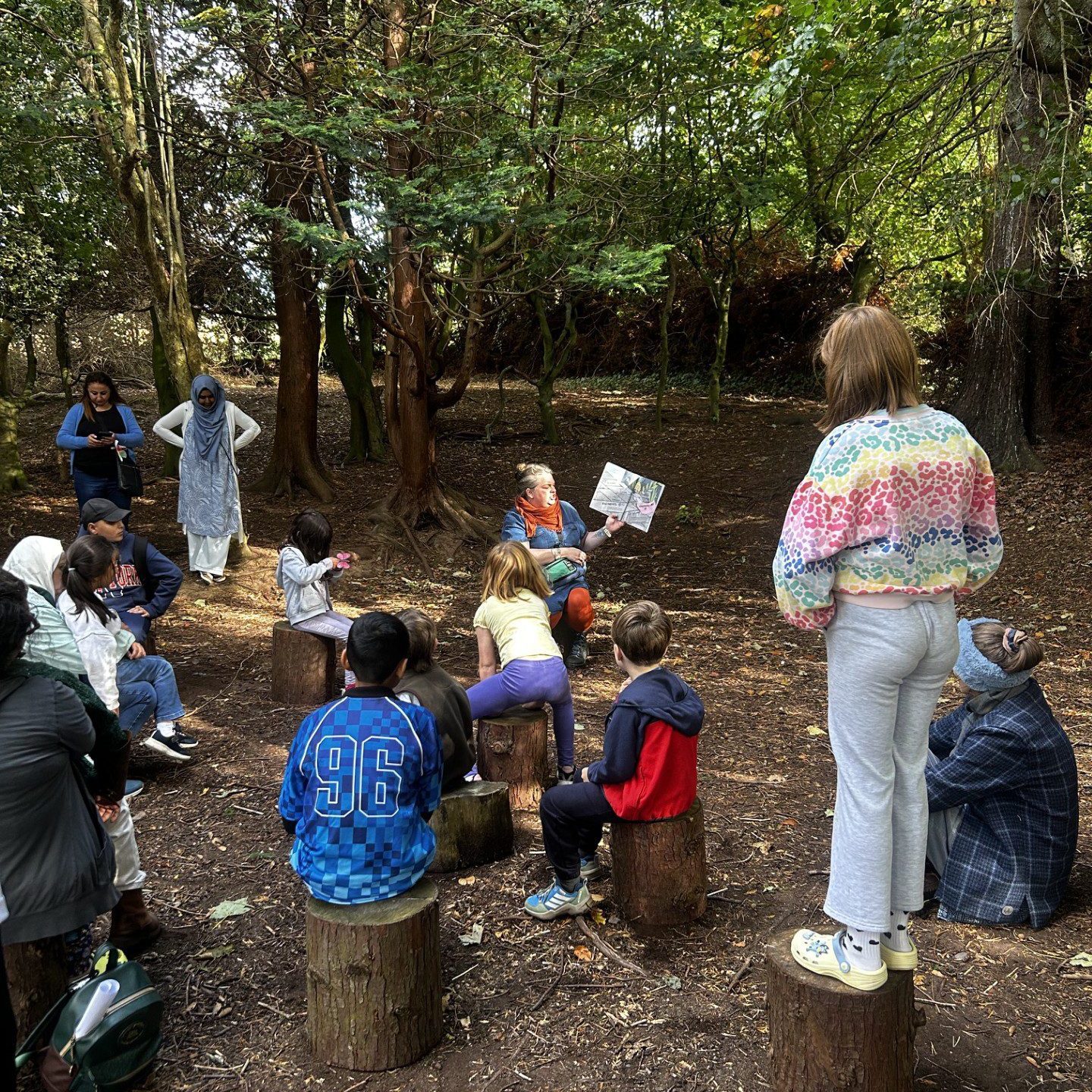
We then made butterflies and doves from paper, adorning them with messages of peace and solidarity, read stories together and watched a series of short animations made by children in Scotland and Palestine.
Karoline Hardt, from ScrapAntics, shared these lovely words with us about the day:
“One mother arrived with the words: “Welcome to paradise!”
I also observed the kids becoming excited by their surroundings: discovering how prickly the shells of the beechnuts are, finding the seeds that they once held, feeling how soft the shell is inside, learning why that might be, learning that the seeds can grow into trees, learning that they need soil, water and sunlight to do that, running around the site to identify a suitable spot to plant their seeds. Then finding a structure that unfortunately wasn’t there to be climbed on, next discovering a hill they could roll down on. Finding berries and learning if they could eat them or not.
It was great to see the play that everything in the garden afforded the kids!”
Days like this feel so important to us at Forgan Arts Centre, when we can introduce new people to the garden and learn together about the human and non-human world around us, engaging in conversations about climate resilience, hope and solidarity.
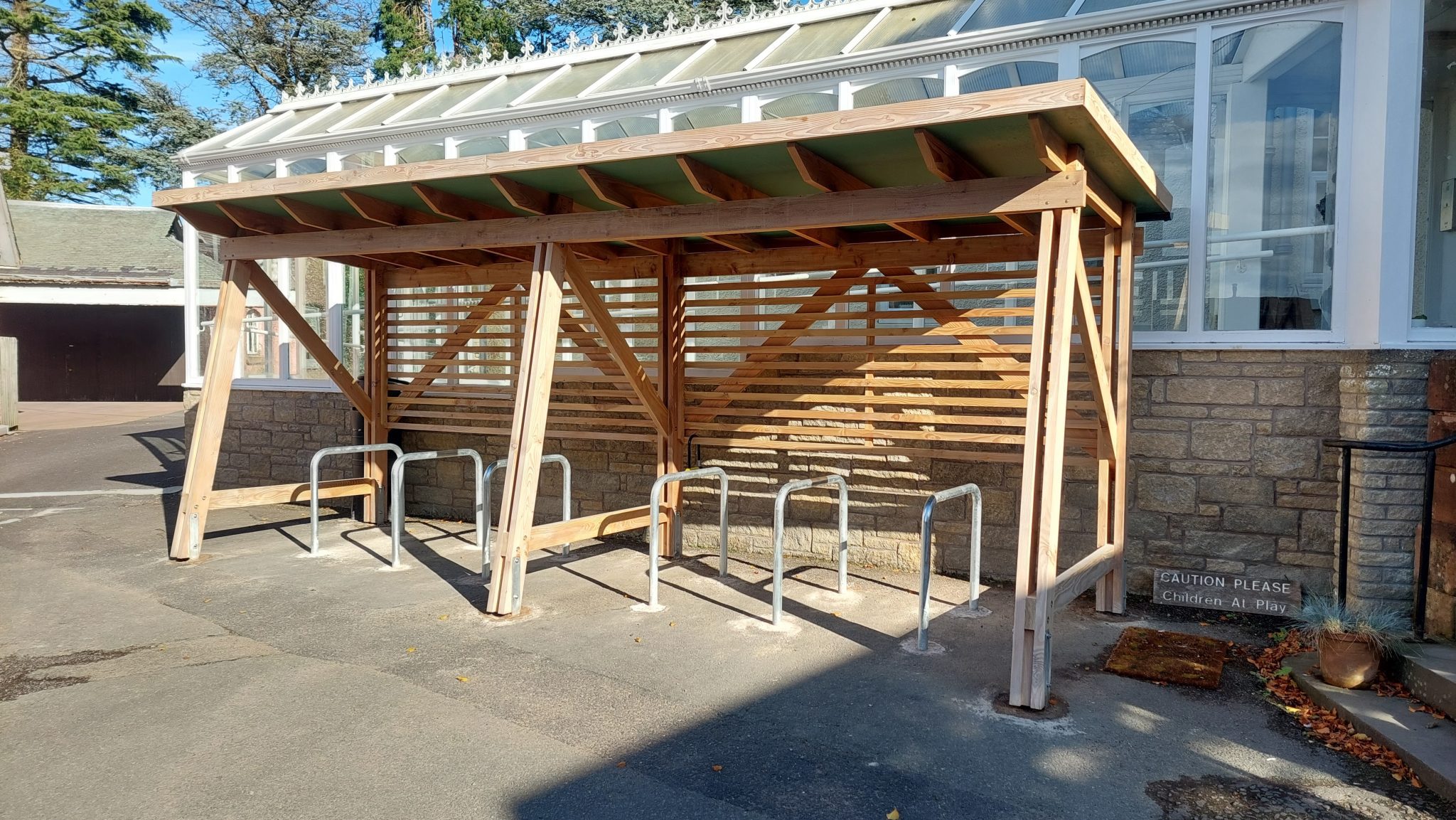
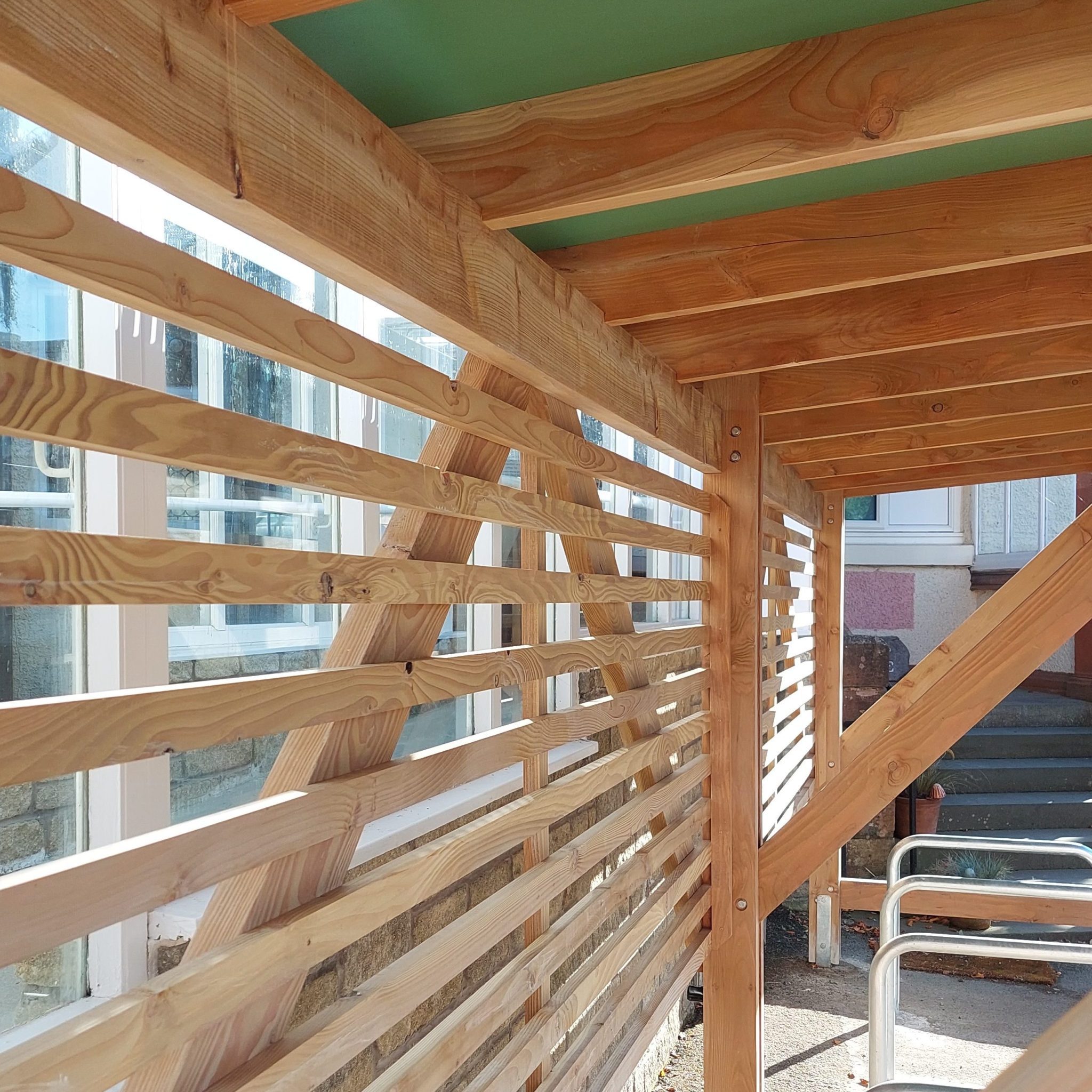
Bike dreams do come true! Not only is our new shelter keeping your bikes safe and dry; it’s storing rainwater, diverting run off, and providing a home for all kinds of little creatures.
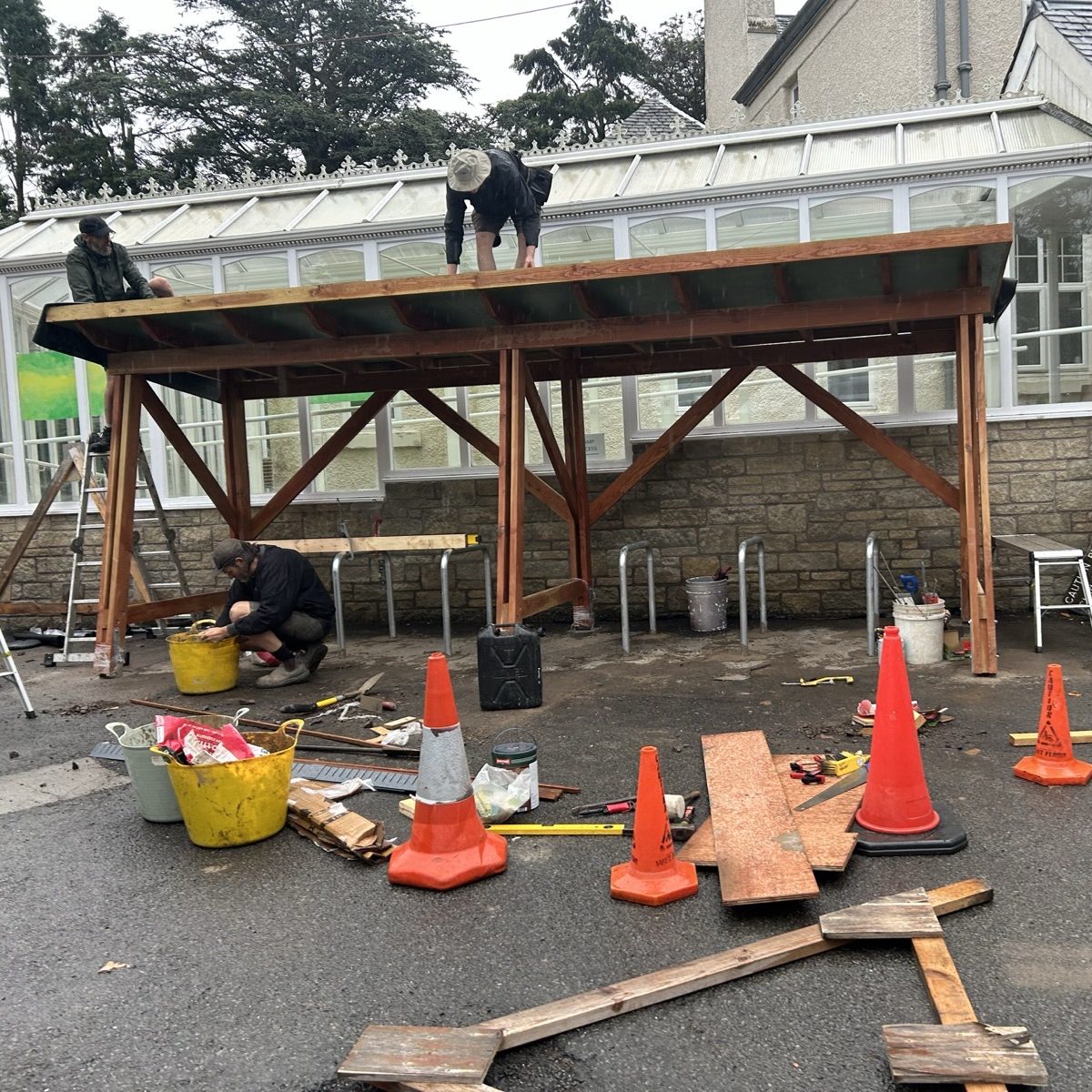
We’ve enjoyed working with Old School Fabrications to create a deliberately simple, robust structure, using locally sourced materials. The beautiful Douglas fir will be left to weather naturally, and the green roof will soften and change with the seasons.
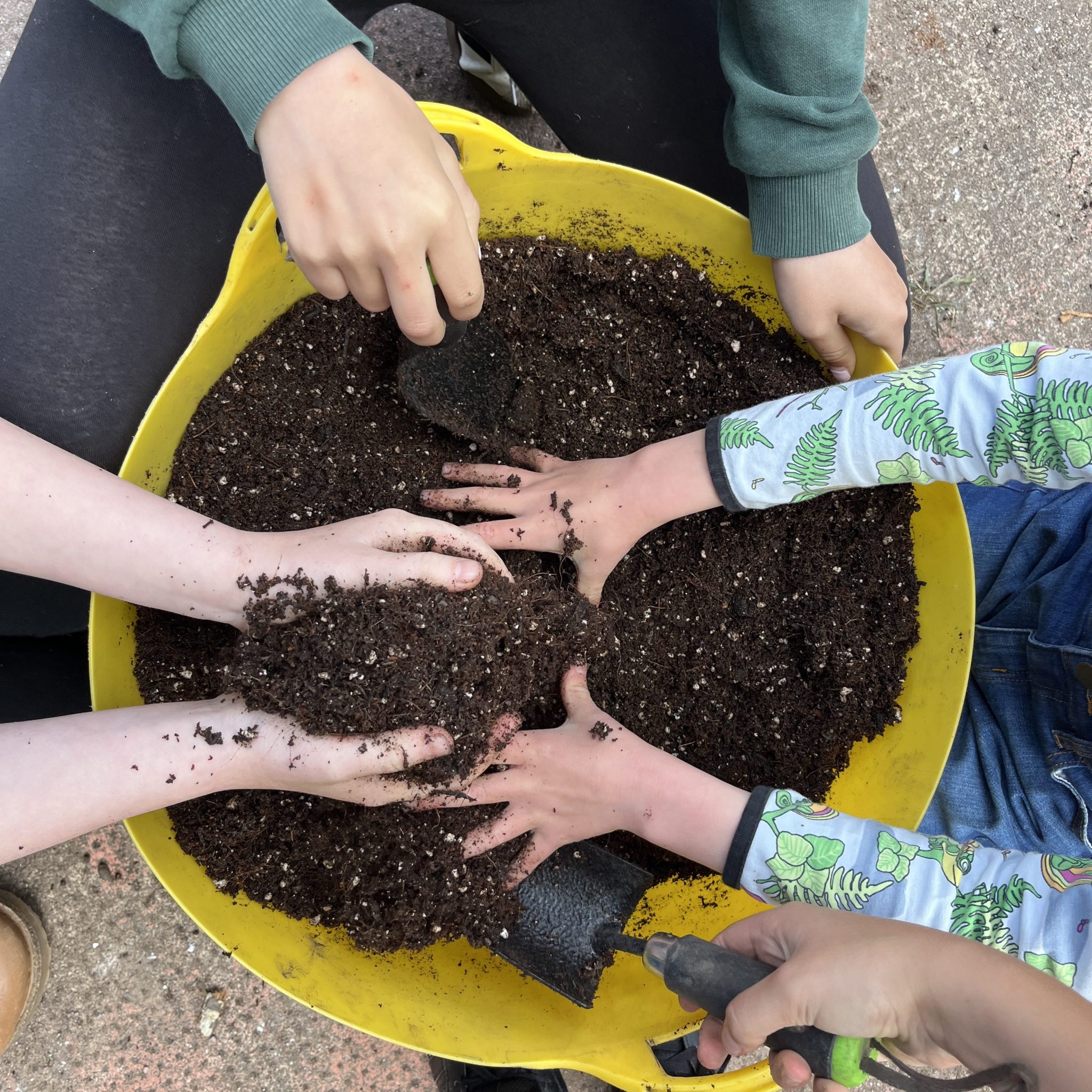
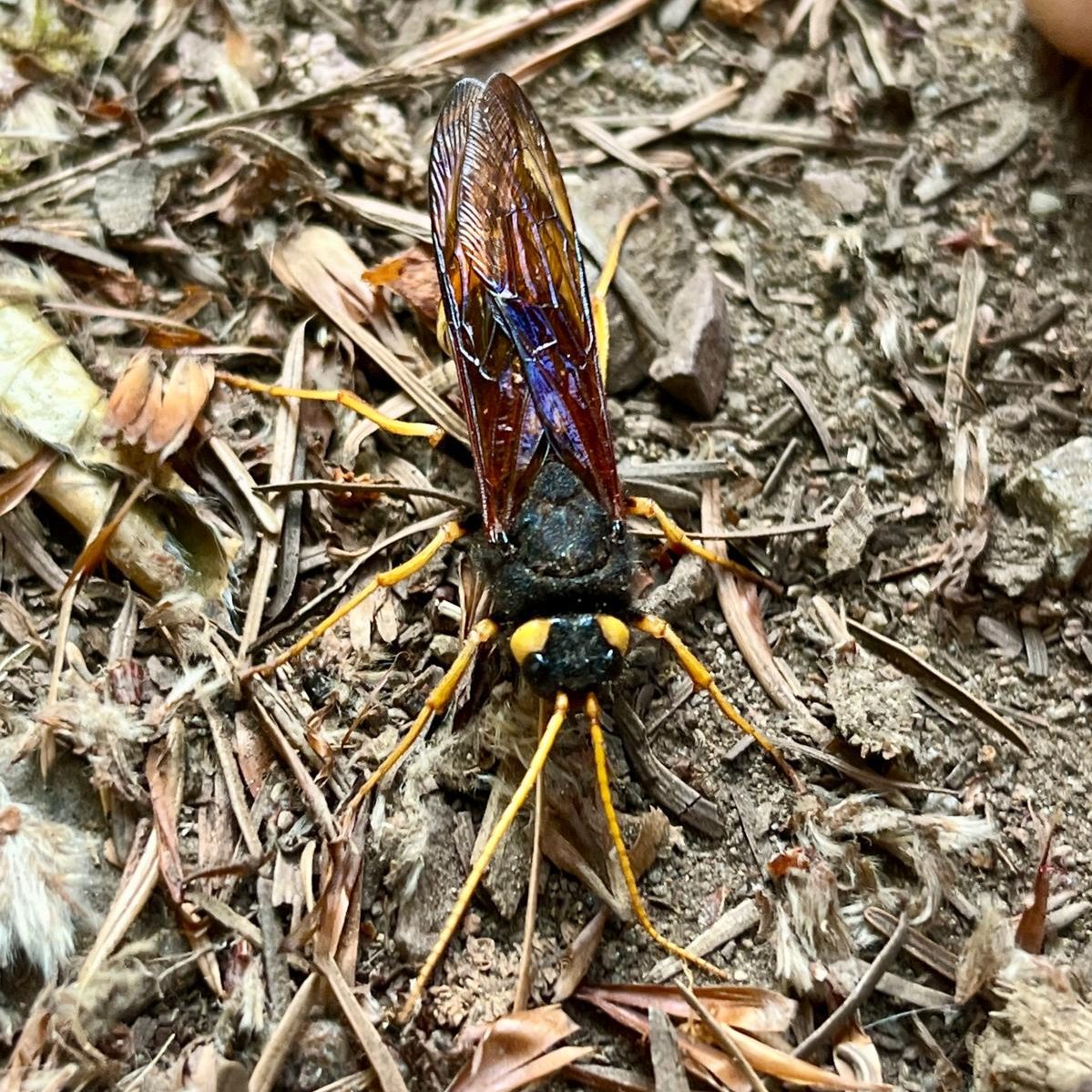
Planting and maintaining our roof has been a community effort, with generous help from local volunteers, and children from Newport Primary School. It will continue to grow into a thriving biodiverse ecosystem, helping bees, butterflies, and other invertebrates. Over time we plan to add deadwood planters to the sides of the shelter, encouraging mosses, fungi, and ground-dwelling insects too. We already have a very happy resident wood wasp and look forward to seeing who else pops in!
A couple of heavy downpours have put the drainage system to test: downpipes and water butts are capturing and storing rainwater for use in the gardens and grounds. Impressed by our efforts, Scottish Water have gifted us a rainwater planter to help divert even more rain water from public drains. Watch this space – we have a rain garden in our sights!
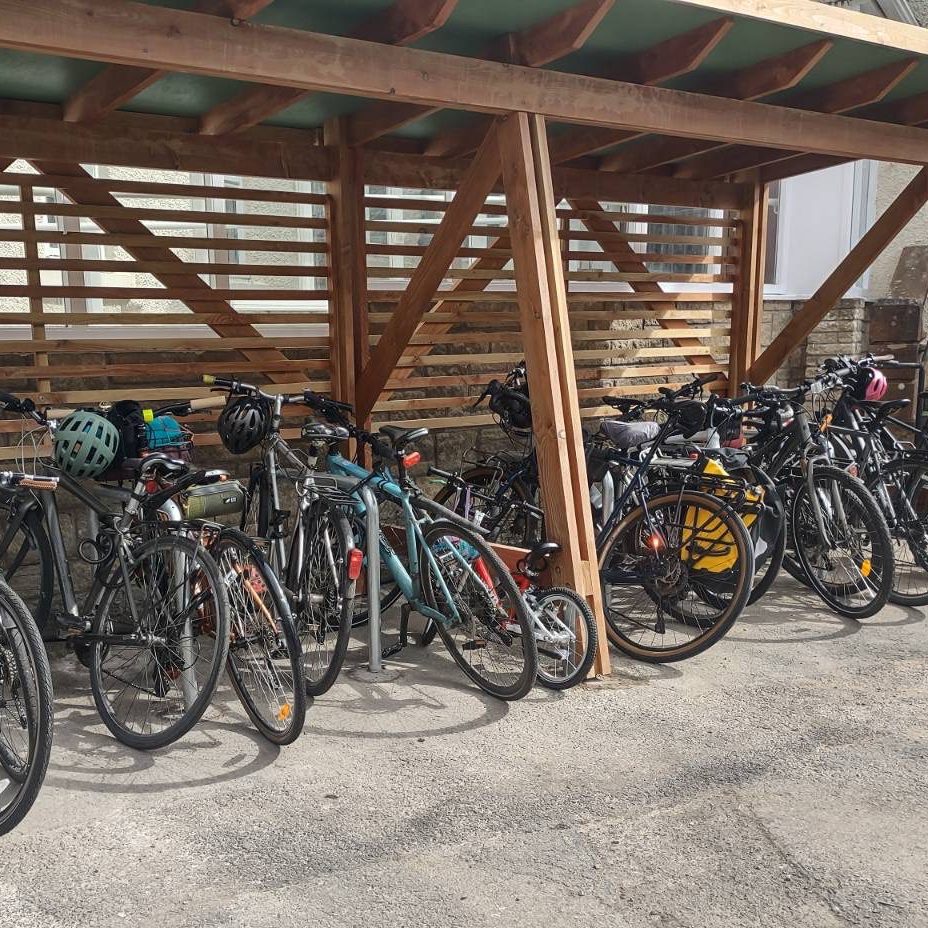
The bike shelter has been well used by staff, studio holders and students since being installed in July, holding up to 20 bikes during our Lughnasadh celebration in August. Come along to our Kidical Mass family bike ride on Sat 10 October to help us launch the shelter officially and raise a mug of hot chocolate to pedal power!
Do you need some encouragement to get on your bike? Everyone who comes by bike to classes and workshops this October will receive a discount code for next block.
Huge thanks to National Lottery Awards for All for supporting this project.
Making Biochar!
Here at Forgan Arts Centre we are trying our best to reduce waste from our events and where possible turn any residual waste into a positive resource.
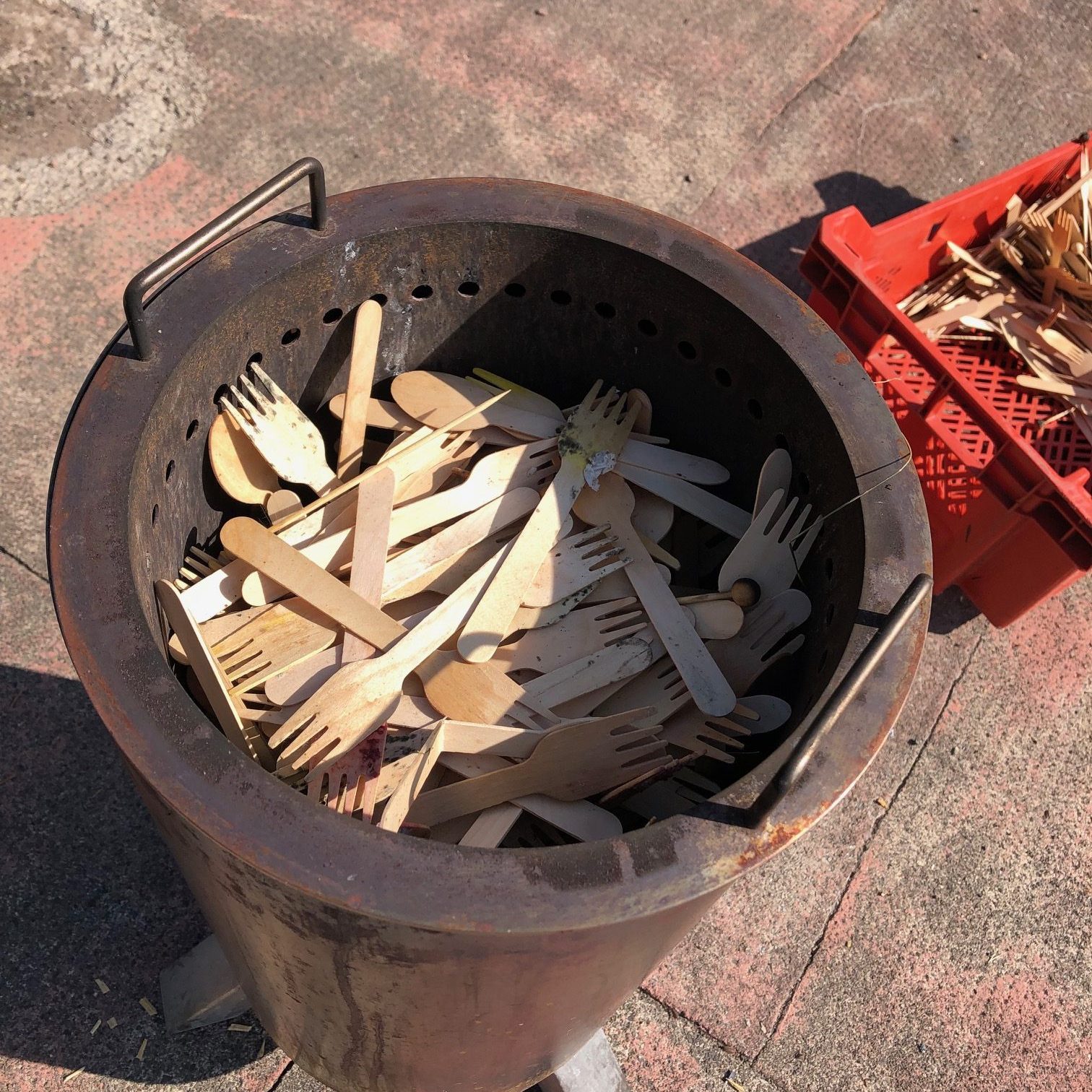
One example of this was using the post use wooden cutlery collected at the recent Lughnasadh festival. Before the event we worked with the food suppliers to ensure that the food containers supplied by the vendors were compostable, after the festival these containers were collected in a separate bin for composting onsite and then turned into compost for the garden.
Instead of traditional composting, the used wooden cutlery was turned into Biochar and added to the garden as a water retaining soil amendment and also storing carbon in the soil.
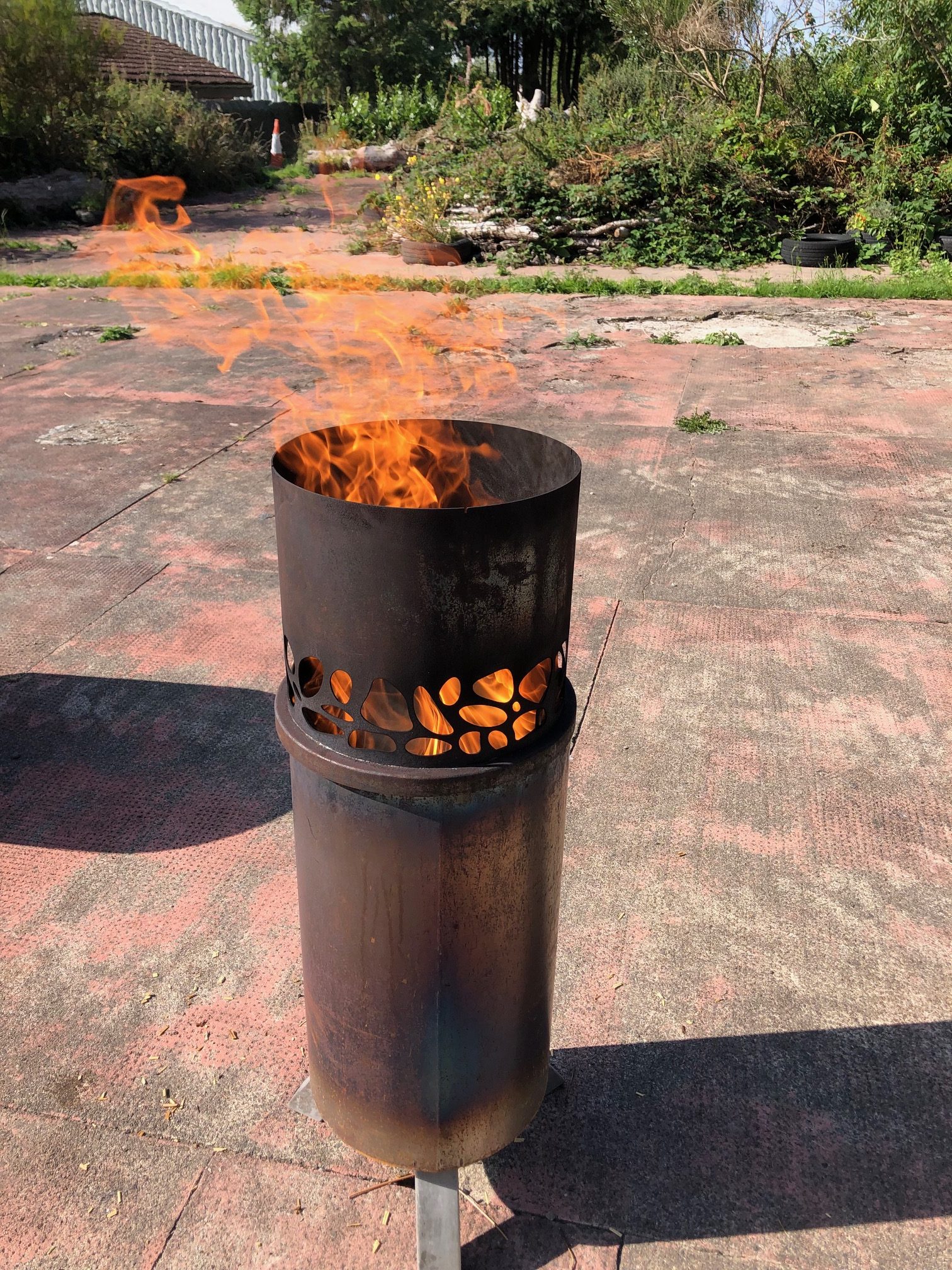
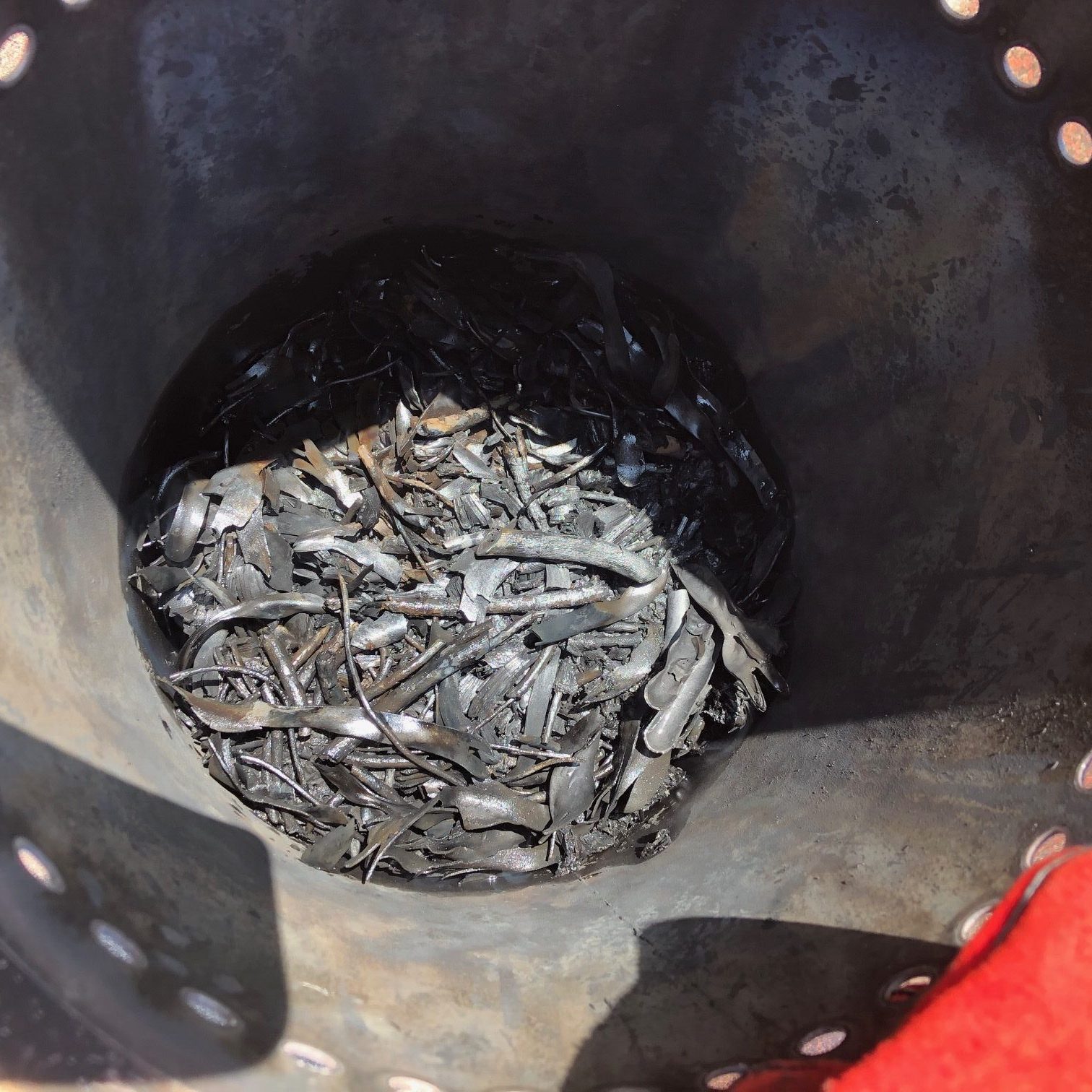
The wooden cutlery was added to our biochar kiln and the high temperature burn left behind charcoal which, once soaked in run off from our wormery*, will be ready to add to the garden beds for flower, vegetable and dye plant growing.
Biochar is a form of charcoal that is made at a high heat burn with added nutrients and microbes. The Biochar forms an inert carbon that will not decompose, so it is retained in the soil, and when added to soil or compost, the biochar helps support the soil microbes, and thus plant growth, water retention and provides nutrients.
*the wormery helps process food waste from the Centre into a high nutrient soil amendment and the liquid run off can be used as a fertiliser.
Photos show the made charcoal, the biochar kiln, and he wooden cutlery in the kiln before the biochar burn!