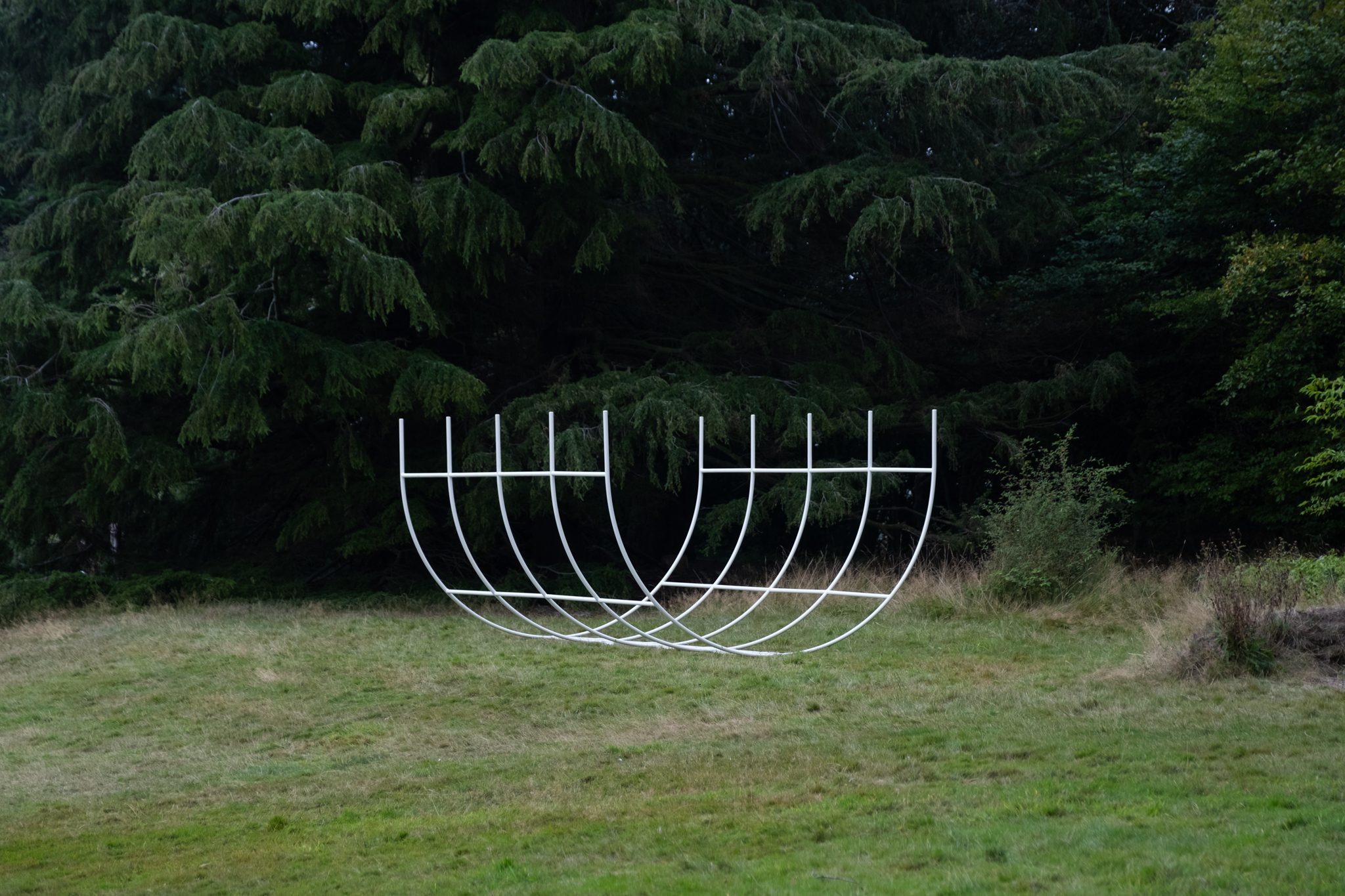
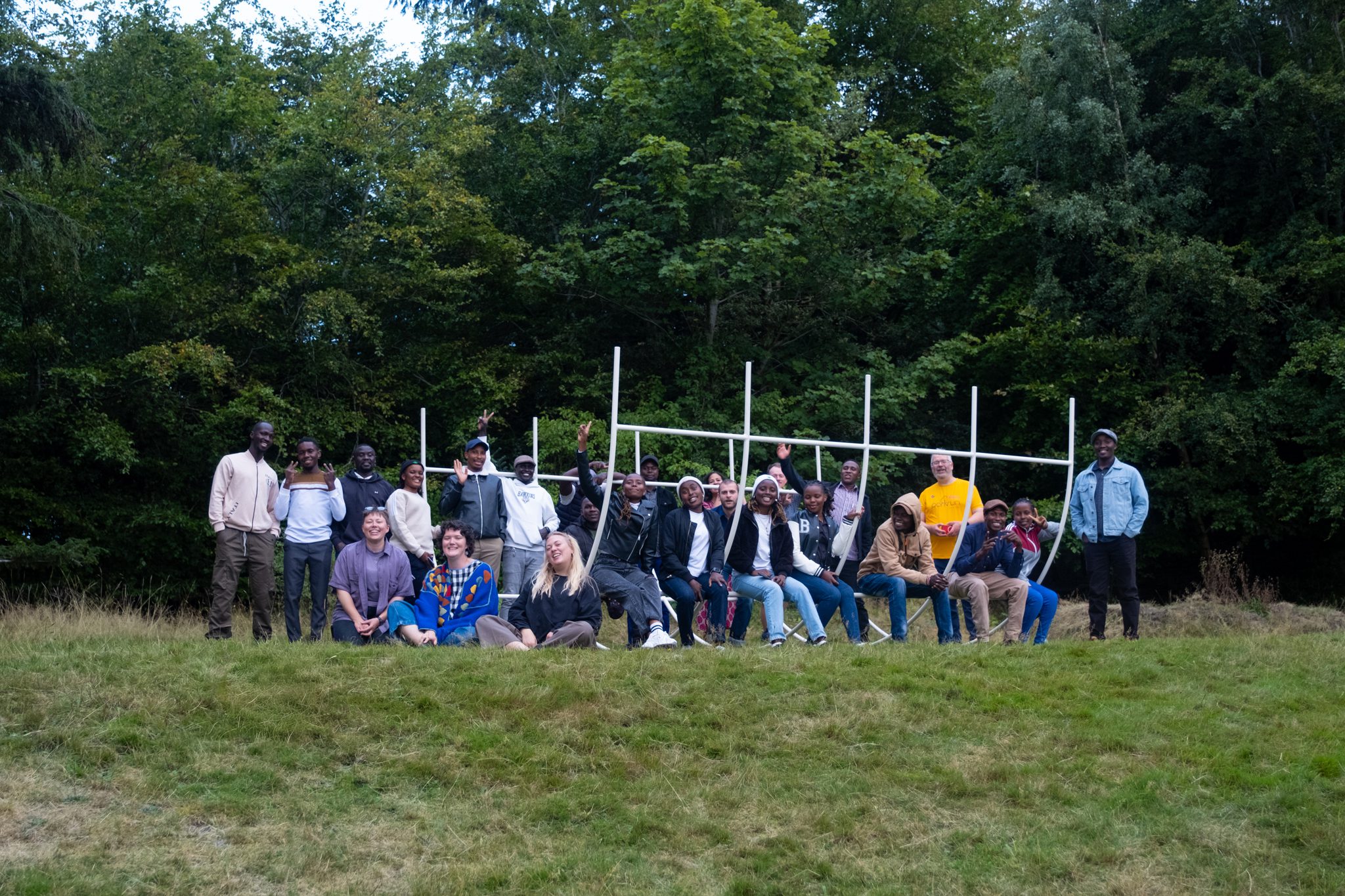
Fabricated from steel bars bent into arcs, After Paradise takes the form of an inverted polytunnel skeleton, one of the key infrastructures of industrial horticulture. The subject of the artwork is what is usually assembled within these frames: strawberry seeds bred in the Netherlands, coir harvested from India, bumblebee colonies bred in Spain and shipped in yellow boxes, and the hands of seasonal workers from Central Asia, East Africa, South America and Eastern Europe. These global chains converge within the polytunnel’s fabricated micro-climate, complicating the notion of what is often called ‘grown locally’.
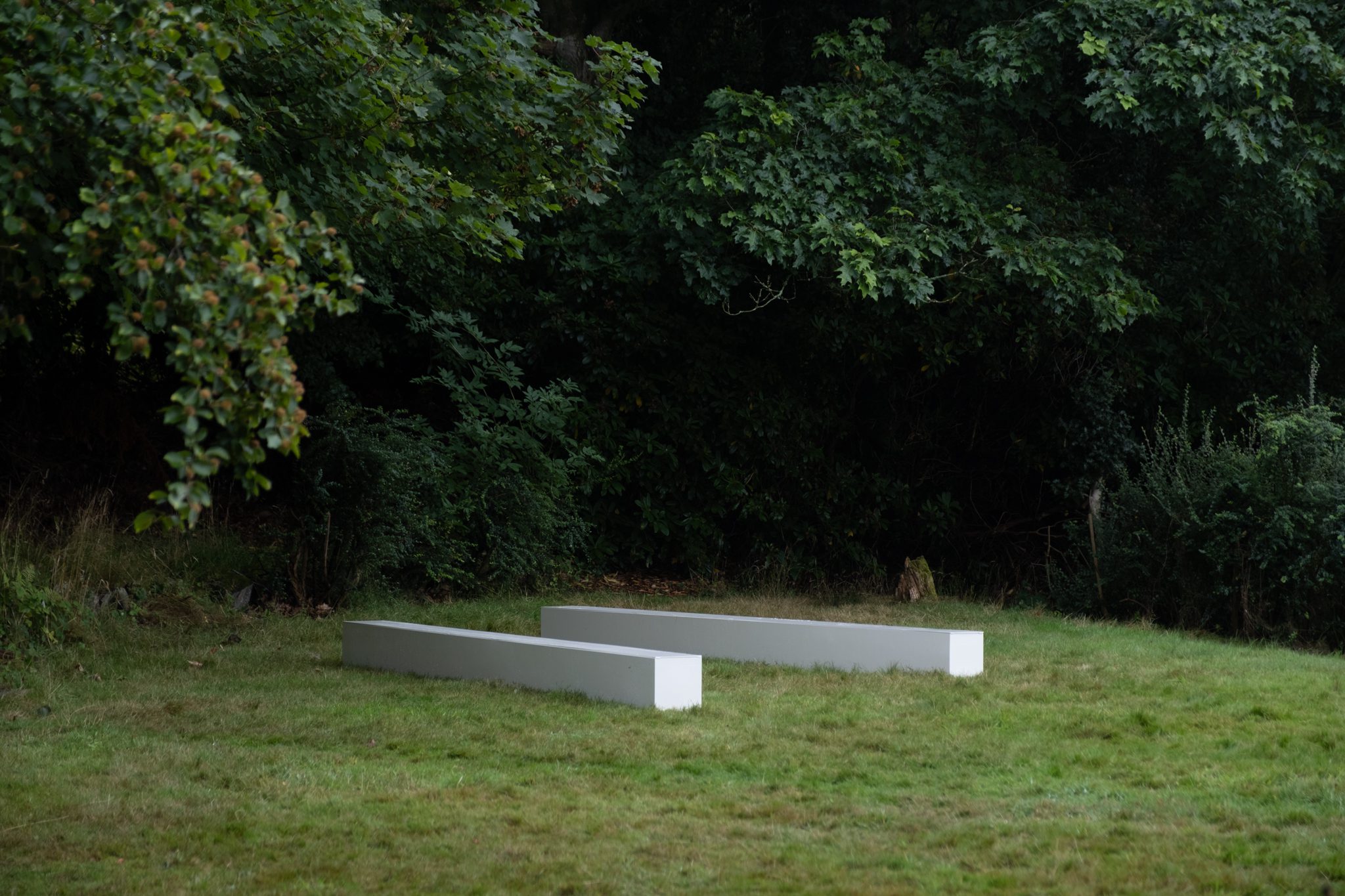
You may see clasped hands emerging from the ground, the skeleton of a boat washed up on the hill, a great white cage or the remains of an animal in the grass. Something that has landed after a heavy storm, perched between movement and stillness, or suspended just above the earth. The pale, monochrome surface and rigid architecture stands out against the living forest behind it. Nearby, two long, low benches lie side by side, like the two lines of a disjointed pause symbol has been set down in the middle of the garden.
The sculpture develops from a piece called Paradise (These are White Snakes), exhibited at TimeSpan in Helmsdale in spring 2026, where the inverted steel polytunnel functioned as an oil fountain. At Forgan Arts Centre, that system has been dismantled and the two troughs have become benches, turning the artwork into a sculptural site for gathering, discussion and activities in the garden.
Here in Fife, soft fruit production and seasonal labour aren’t a backdrop, they are part of the social and economic fabric. After Paradise has landed in a place connected to the systems that shaped it. It is a deliberately visible intervention, hard to ignore, designed to draw our attention to what happens just over the garden wall. It is, as one visitor put it, the skeleton of the boat we are all in.
José Oliva is a Venezuelan artist living and working in London. His practice engages with outsourced labour systems, migrant economies, and the hierarchies that shape everyday urban life, interrogating how these structures are experienced, negotiated, and reproduced within shared social spaces.
He works through long-term collaborations that prioritise co-authorship and sustained relationships, influencing how the work is made, shown, and circulated. His projects often unfold through enacted social exchanges or site-responsive provocations, taking the form of performances, drawings, sculptures, and public interventions.
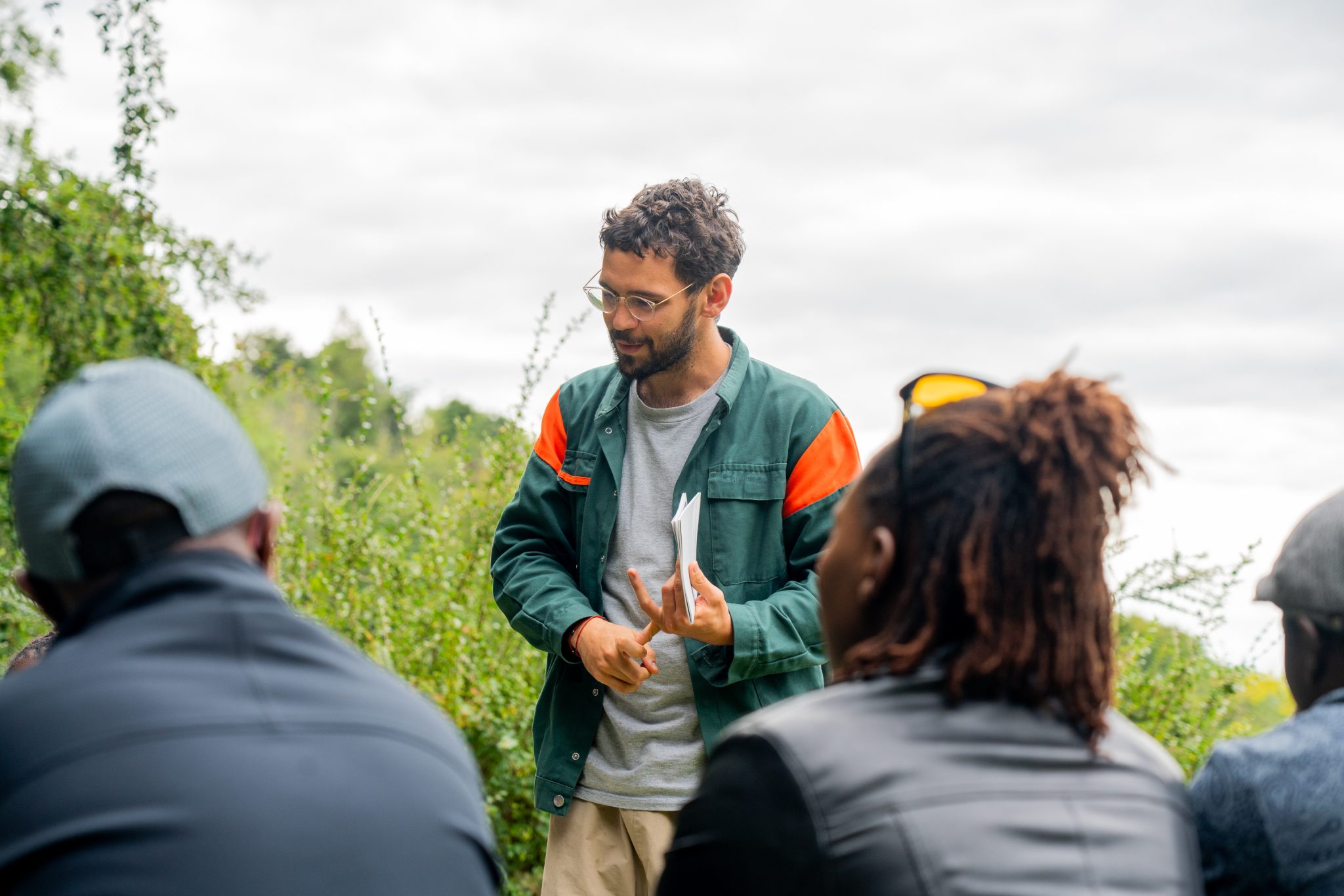
José joined us as artist-in-residence at Forgan Arts Centre in Summer 2026, to develop an project exploring the relationship between industrial agriculture and outsourced labour in Fife, Angus and across the UK. Building on conversations with seasonal workers, organisers, researchers, and farm visits, the research focuses on the material, ecological, and labour conditions shaping these realities.
Through gatherings and discussions, the project built connections between migrant workers and local communities, creating space for dialogue and exchange. A central question in his research is what it means to encounter a product proudly labelled “Produced in the UK” and to consider the layers of labour, movement, and ecological impact that this conceals.