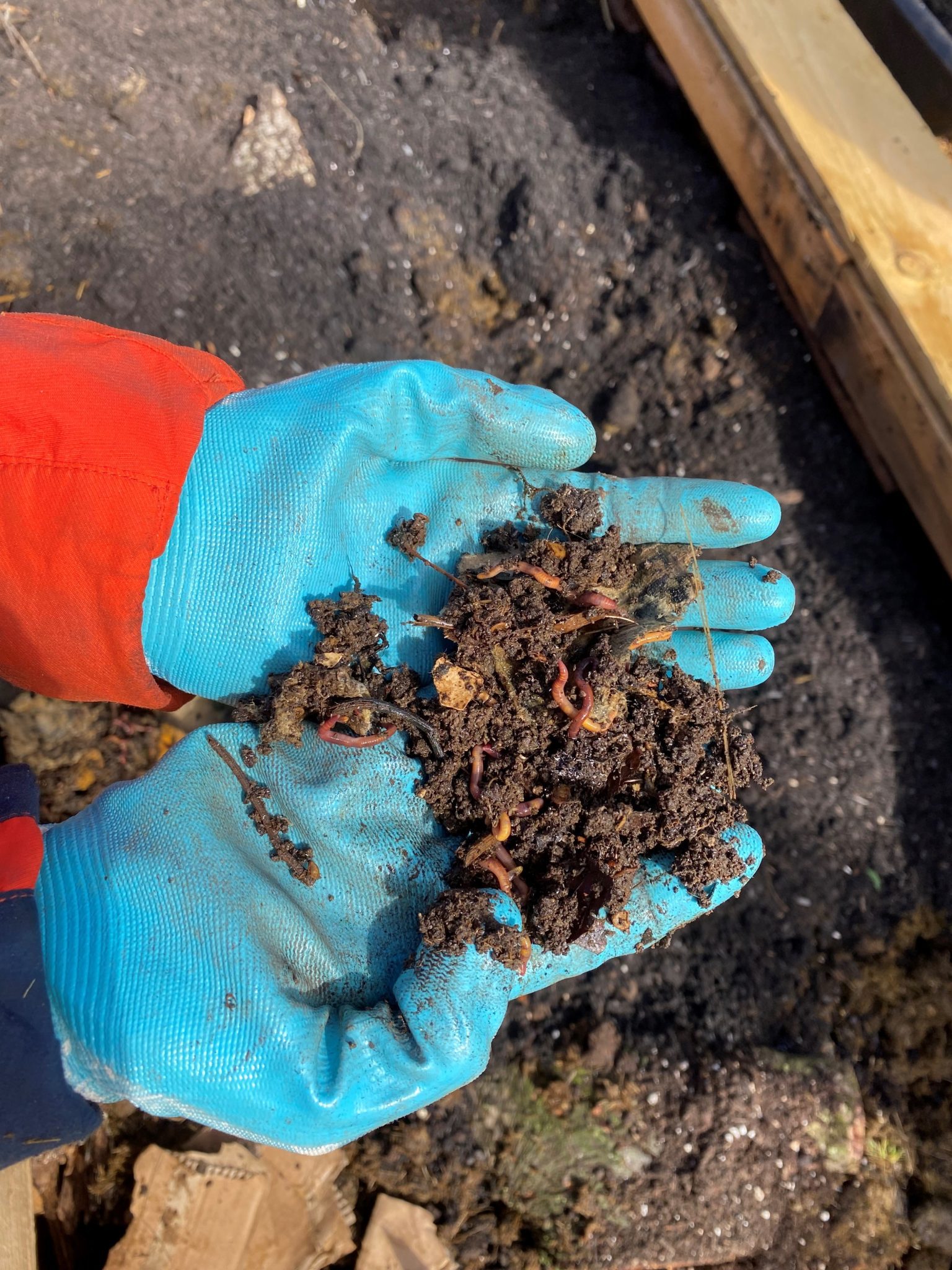
By reducing the food waste sent to landfill we are diverting a potential source of methane and turning it into plant food instead. Where food waste is unavoidable, it becomes a feast for our hungry worms.
The wormery turns scraps of food, tea leaves and coffee grounds into a liquid fertiliser that can be diluted and added to plant pots, raised beds and to the soil around plants growing in the ground, replacing used minerals. The vermicompost left after the worms have turned the food scraps into a rich dark medium, can be mixed with leaf mold to make a potting mix, or added as a top dressing on plant pots, used as a compost activator, or directly as a thin layer on soil. The vermicompost and/or liquid fertiliser can also be added to charcoal to create biochar.
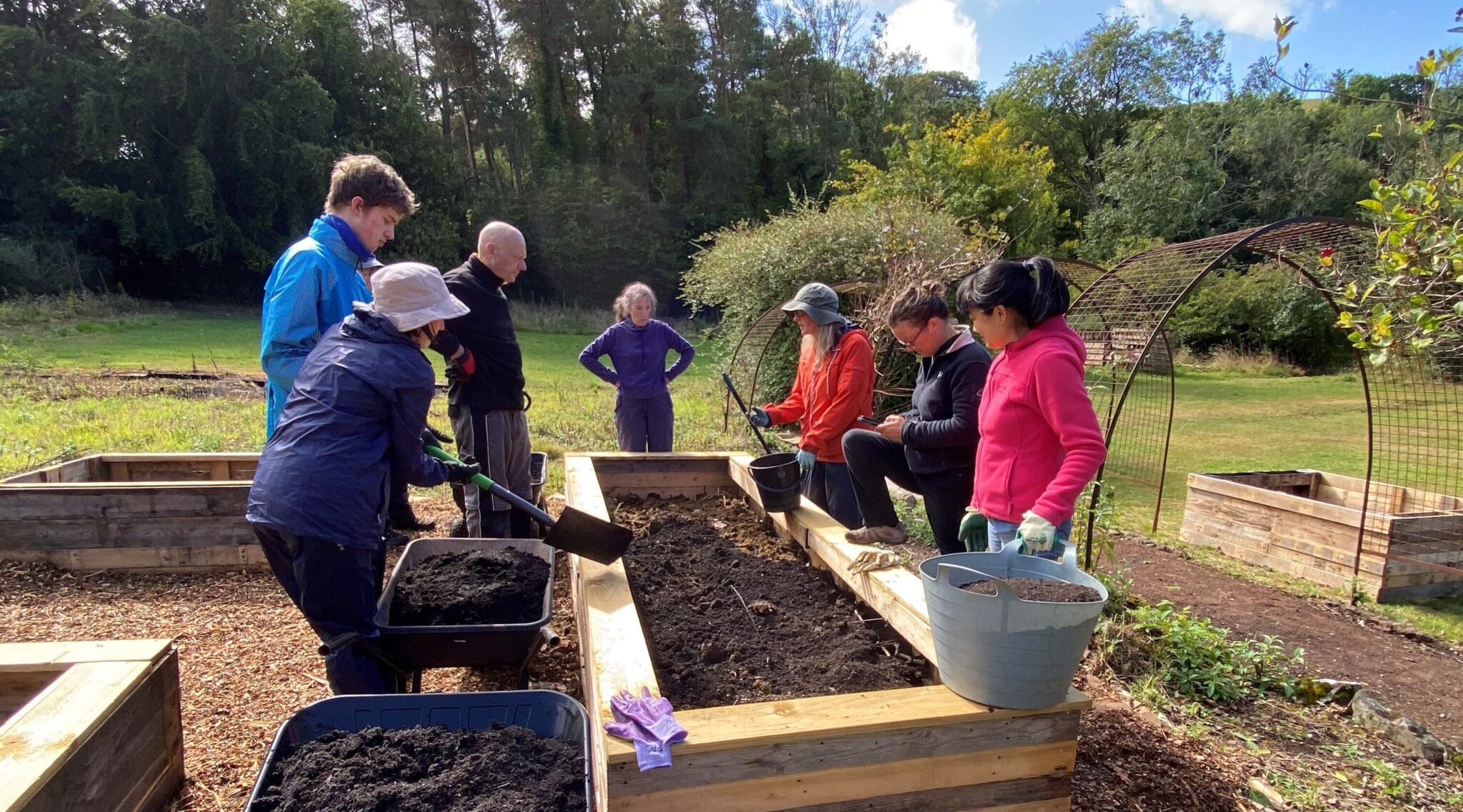
We have several types of compost heaps, we generate a lot of green waste on site. Grass clippings (nitrogen rich) are collected and layered with fallen leaves (carbon rich) to make a compost with ‘green’ and ‘brown’ components to speed up the breakdown of both and prevent putrefaction of wet grass leaves only (very smelly).
Traditional cold compost heaps are left to breakdown over several years. With garden clipping added gradually to the pile. If we have a keen volunteer to turn the heap, so much the better as it speeds the decomposition process along by introducing air to the centre of the pile.
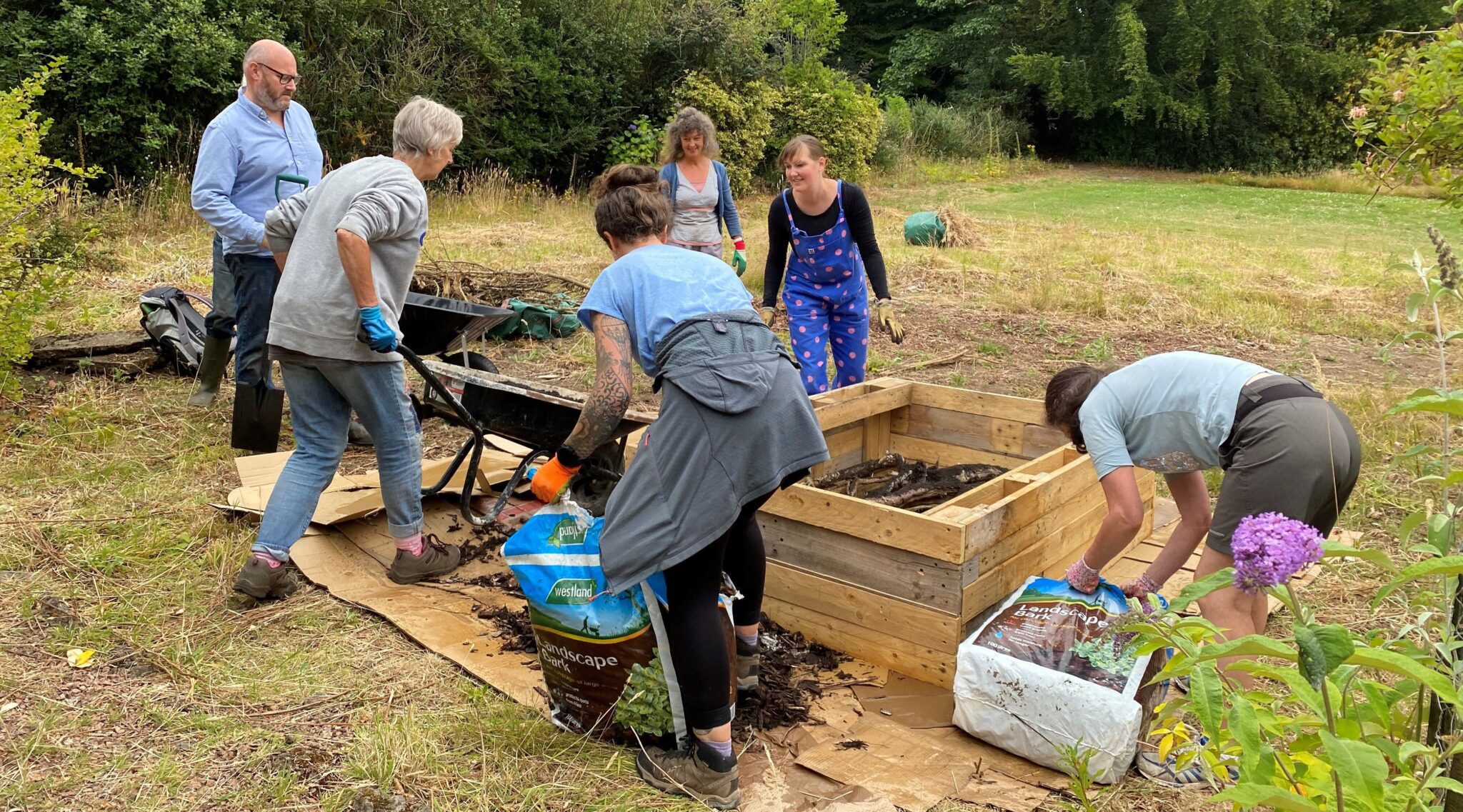
We also have leaf mold and woodchip piles which are left to break down over time or to balance the greens in the cold compost piles.