Independent Artist-in-Residence
We were always here – a collaborative residency at Forgan Arts Centre
We first met in the kitchen at a party where a man was telling the room that feminism had gone too far. He’d chosen an unsympathetic crowd for his particular strand of misogyny, as we found ourselves (again) doing the work of educating a man on the basics of trans-inclusive feminism. On the way home we delighted in this new found solidarity, always willing to be the feminist killjoys at the party, rather than exhausted by microaggressions. As we shared phone numbers, and details of our artistic practices, the idea of working collaboratively began to gestate.
A couple of years later, we arrived at Forgan Arts Centre to develop a new collaborative, researchbased artwork. Before our residency we had planned to focus on erased queer ancestry in rural Scotland, but the space offered by the residency allowed our thinking to expand as we deeply explored and challenged each others practices. Our imaginary expanded into something transhistorical: to develop a collaborative practice that invites people to collectively imagine pre-colonial histories and erased queer ancestry with us.
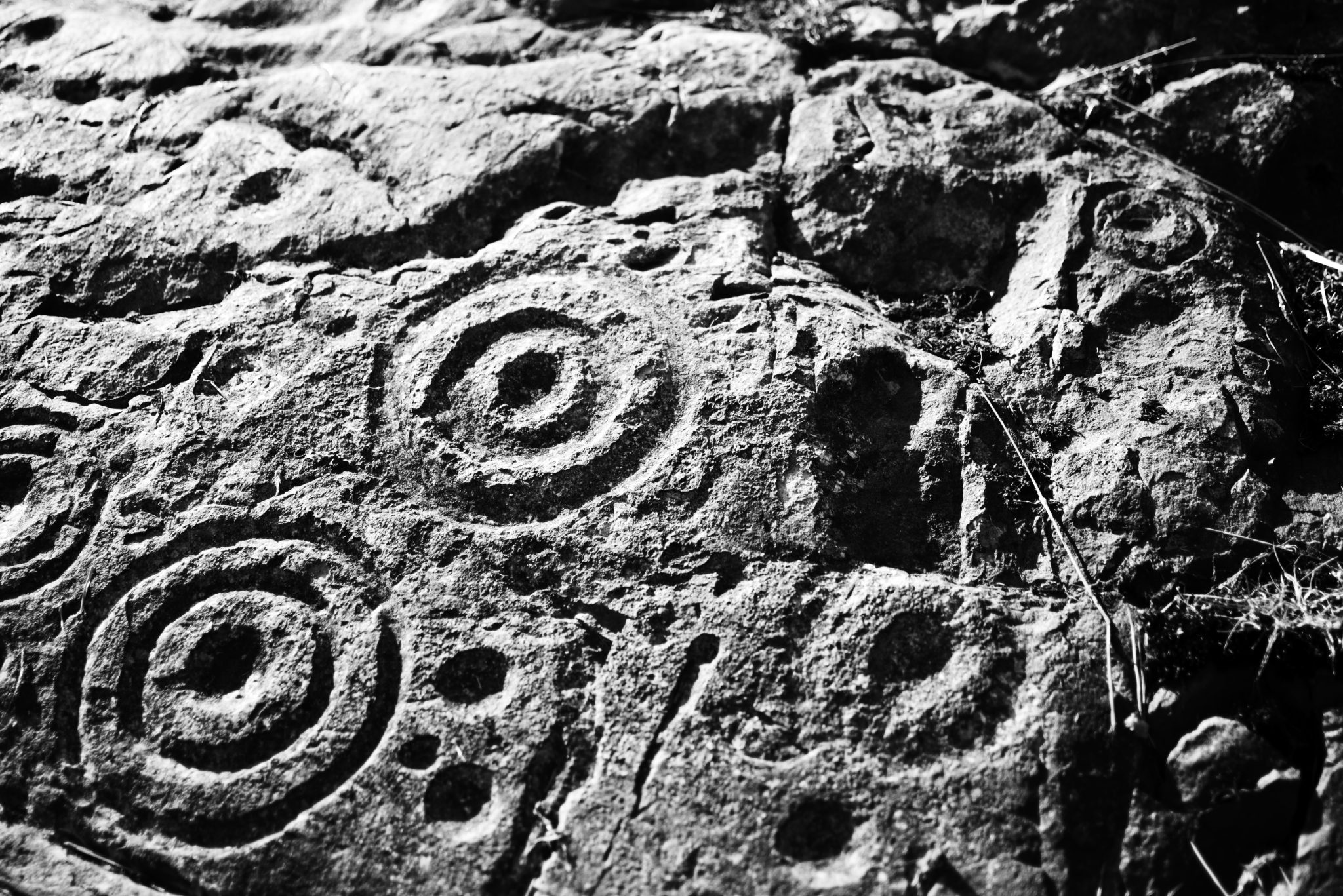
Ailie began adapting her participatory visual mapping methods, previously used in feminist economic and survivor-led contexts to develop something new for this collaboration. Experimenting with printing techniques – printing with our bodies, using found, foraged and recycled materials from the site at Forgan, she created printed maps drawing on her research into lesser-told queer histories in the Scottish witch trials and the women-led societies of the middle-ages that preceded them. Tam created somatic practices and meditative journeying, developed from their work creating queer and trans rituals and building temporary shrines to queer and trans ancestors.
On the third day of the workshop Rowan Lear, curator at Forgan Arts and Rachael Simpson, Project Lead of Edge School, led us through towering bracken to a forest clearing where a firepit signalled this as a hangout for local kids. We spoke about queerness in rural and semi-rural contexts and felt the expanse of non-linear time as we imagined kids – and other groups – making community in woodland clearings.
We shared some of our research which had opened us up to evidence of our primordial erotic selves. From Another Mother Tongue by Judy Grahn: “the dildo sex used by European witches in their Dianic Sabbats and other sexual ceremonies were for the purpose of uniting female initiates with the ghost of stag-god, that is, with the masculine god or spirit of the animal world. This sacred act helped forge a vital connection between human society and the herd animal societies on whom they depended for food and clothing, soap, fat and bone.”
Ailie told the tale of the Stick Husband, shared by Melissa K Nelson in Getting Dirty: the Eco-eroticism of Women in Indigenous Oral Literatures. A Yuki story where a young girl has a satisfying erotic relationship with an animate stick being, illustrating the profound intimacy a woman can have with something the modern, industrial world would call inanimate, but in the Yuki worldview is a unique person with important qualities worthy of a relationship.
Ailie aslo shared evidence she had found during research work with Glasgow GOMA of clay prosthetic phalluses, or in old Scots “ane piece of clay formed be hir to the liknes of a mans priwie member” which were seized during raids on queer women’s homes during the witchtrials in Scotland and used as evidence against them, leading to their torture and execution as witches.
By the fourth day at Forgan we had devised a workshop model that we were ready to test. Rhona, Rowan and Rachel, three people from Forgan’s team would be our first participants. We wanted the workshop to feel like a queer/punk/spiritual journey, becoming both facilitators and performers when participants stepped over the threshold into our studio space. Our embodied exercises became vehicles for participants to shed cis-hetero-patriarchal-colonial-capitalist-racist-ableist systems of domination that exist in our tissues and bones, so that they could encounter – however transiently – a pre-colonial, queer past. We invited the three participants into the sitting room of the cottage at Forgan Arts Centre. This space felt neutral, a place where we could talk as artists, sharing the background to our collaboration with participants and understanding who we had in the room. We then invited participants to step through the portal, a holographic curtain between the hall and the studio, so that they could feel that they were leaving one reality behind and entering a space that was otherwise.
There is not as much space in I know as in I don’t know.
Lola Olufemi, Experiments in Imagining Otherwise
On entering Rhona, Rowan and Rachael were invited to stand in the space and Shake This Shit Off. They were guided through a somatic experience of dusting and then – with increasing energy – brushing off the stories we have been told, about power, about who matters in the world, about who we should be and who we should be trying to become. As heat was created in the friction of brushing, participants imagined dominant structures and systems of oppression that have moulded our shape in the world. The brushing sped up and we shaked the shit out before stretching up into the space together. We elongated and touched upon the limitlessness of liberation.
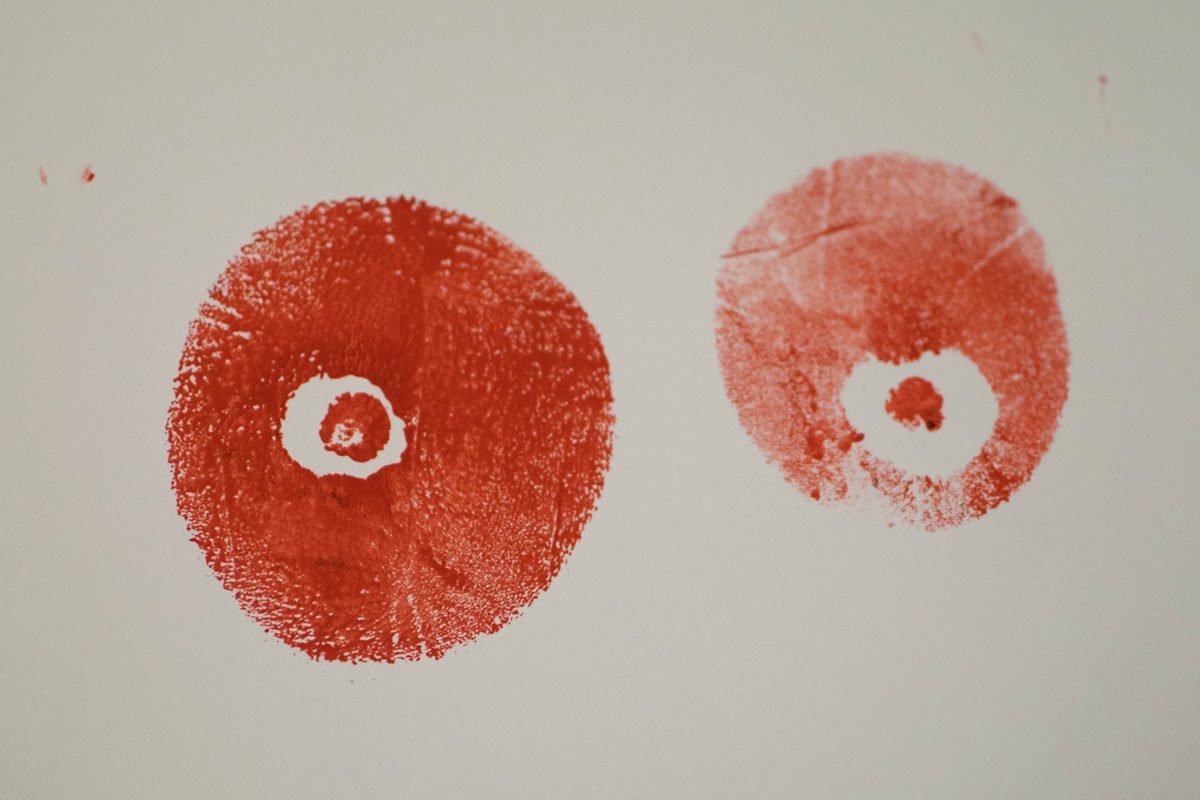
It was now time for Vibrating Towards The Future – a journeying prompt designed to open and stretch participants’ imaginations beyond white-cis-heteropatriarchal-ableist-capitalist-colonised limits so that we might feel the taste and texture of a pre-colonial, queer past.
Drawing on ritual-making methodologies that Tam has developed for connecting trans people to their erased trans ancestors, we guided participants to imagine the existence of marginalised communities and voices as tiny, energetic vibrations on their skin. These vibrations concentrated on the right hand of each participant and led them to a pre-colonial moment between 500 and 50,000 years ago.
When we came back to the studio space, participants were invited to respond to a series of prompts about the world they had just journeyed to:
When was it? Who did they meet there? Where were they? And what more than humans were nearby?
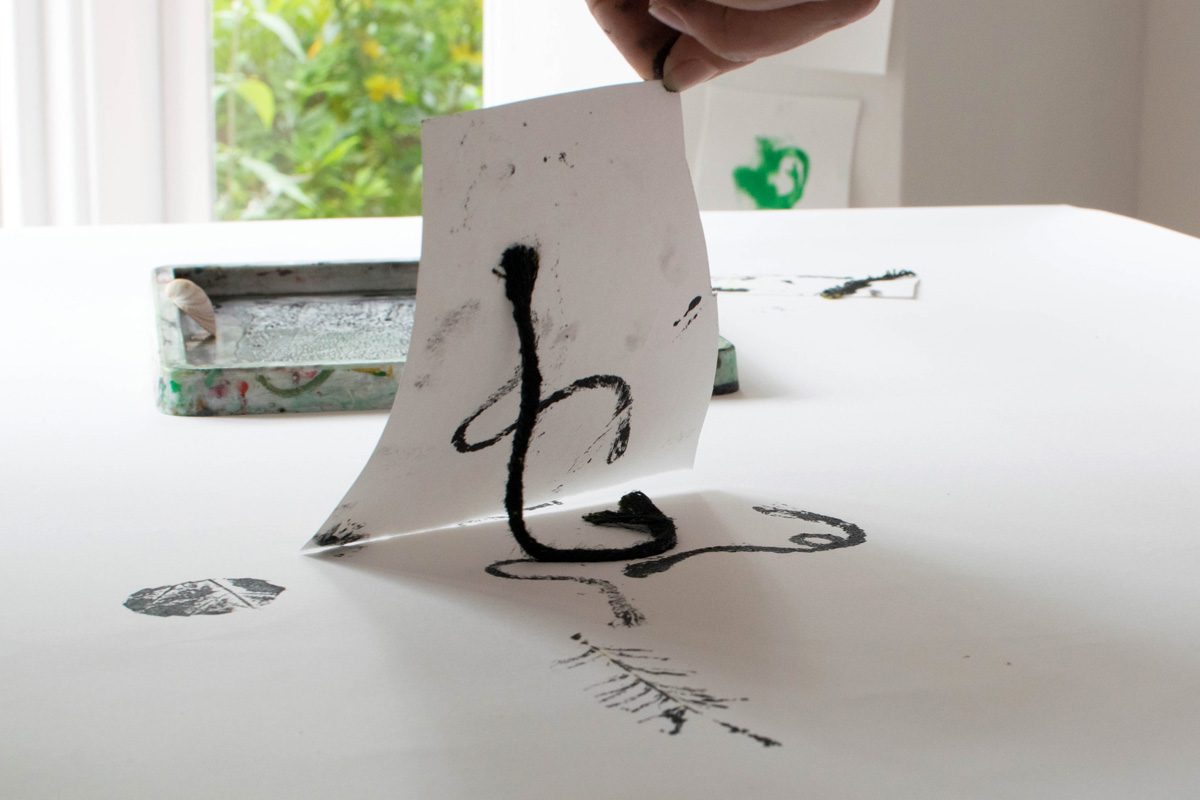
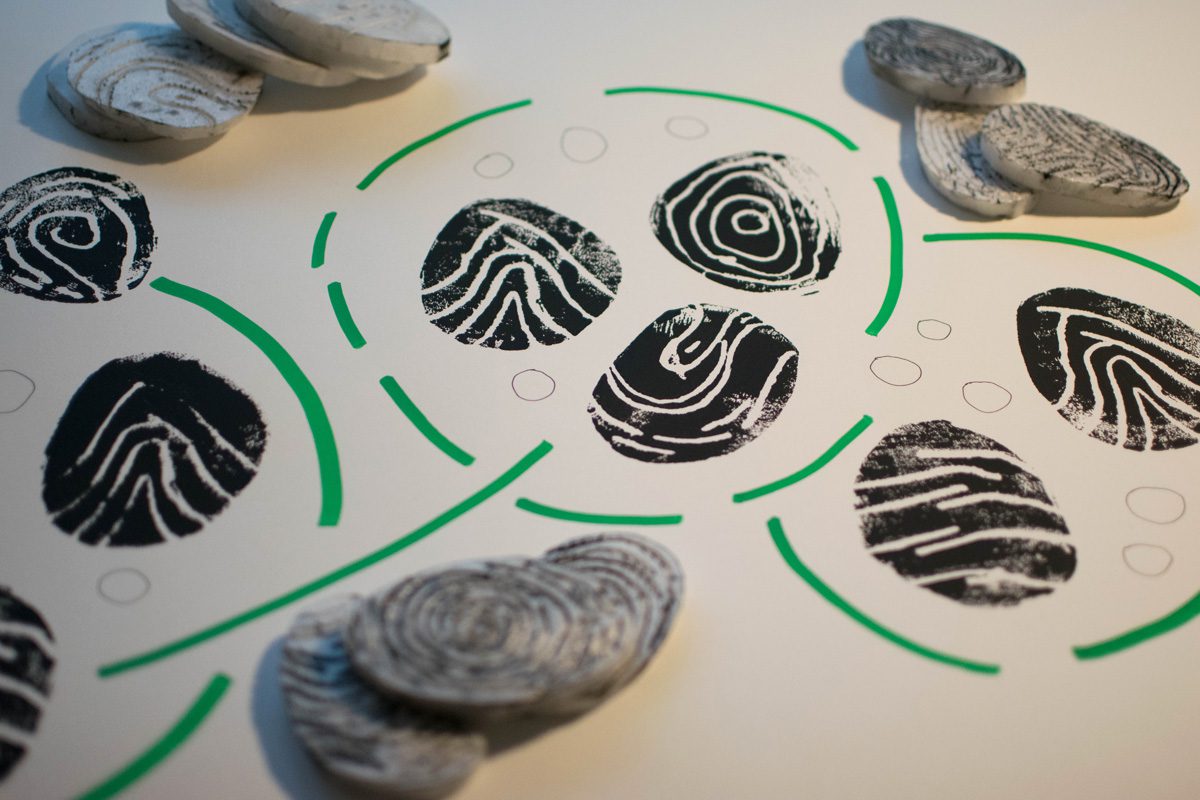
We moved into creating collaborative printed maps of these imagined pre-colonial, queer networks, communities, histories and relationships with the land. To introduce this exercise Ailie described their research into The Gossips, a pre-witch-hunt network of women and other marginalised genders who were politically and socially powerful – but not in a way that we understand Power today. Theirs was a prevalent feminist society in the Middle Ages where women worked and lived collectively, that Silvia Federici has named as “a source of strength unmatched in the modern era.”
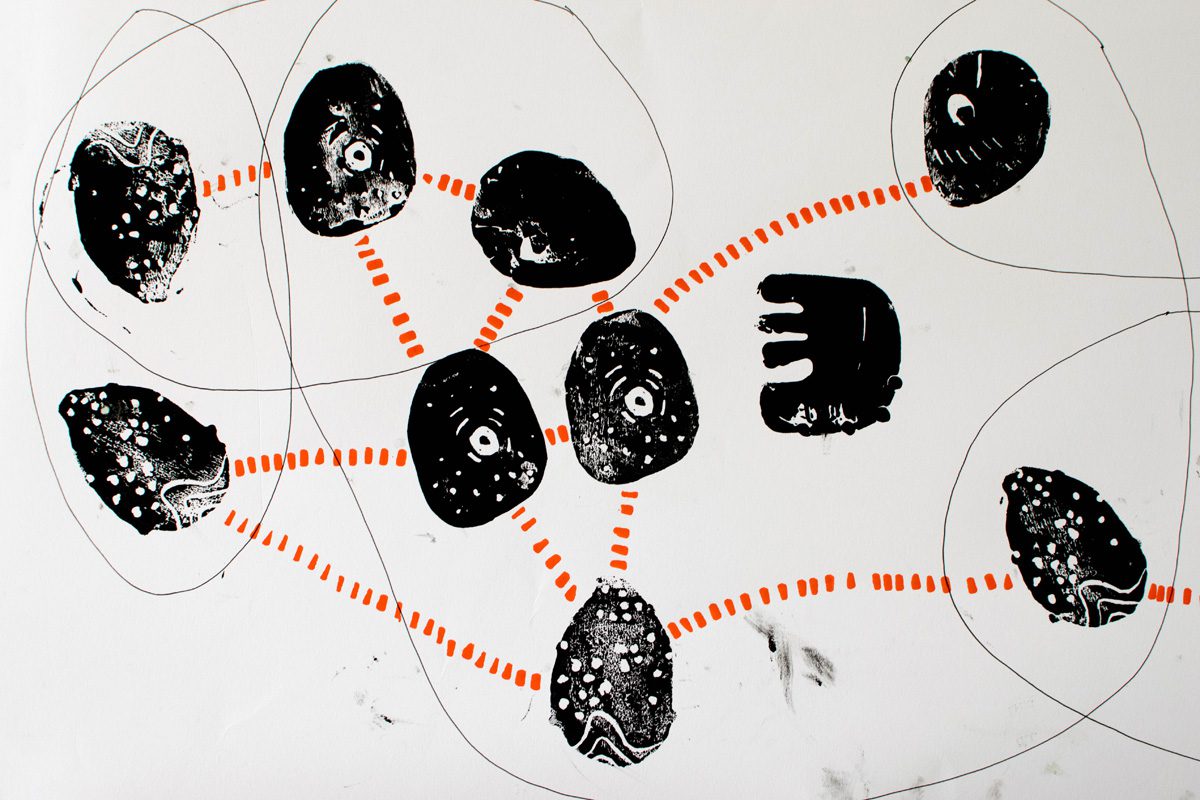
Participants shared a little of what they had imagined so that they could find each other and develop shared maps. Whilst one group focussed on a pre-human-centred-history – perhaps more than 10,000 years ago – the second group built their map to describe the era immediately before colonial conquest, and the patriarchal worldview that engendered it.
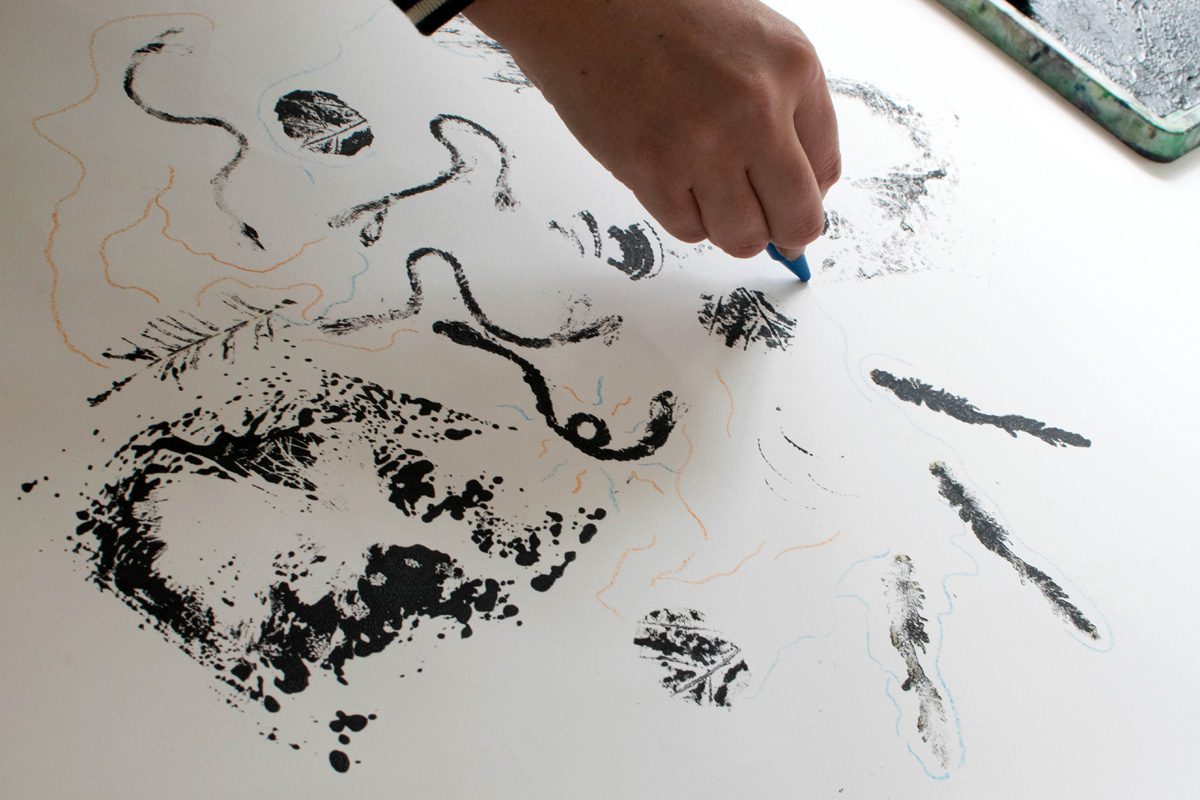
Through the process of printing the different groups were able to have conversations about collapsing time, imagining non-linear community making and how we are shaped by the things left behind. They leant into the possibility of turning from colonial power – that all of us are drenched in – towards mapping the resilience and strength of networks and ways of being that have survived hidden in our bodies’ longing.
We were given rich feedback from the team at Forgan. Our workshop was described as experimental, transportive, imaginative and built up through careful steps. We were told that they had been encouraged to imagine things that they’d never really thought about before:
“I loved the flow and when we worked on the pieces together it felt like a dialogue between two different people’s imaginations.”
“There were these surprising elements. It wasn’t what I thought the afternoon would be, it was much more free-form and imaginative whilst every activity built on the one before.”
A key discussion from this, our workshop’s unfurling moment, was about how participants would have found the imagination exercises easier to delve into if we had offered more examples of how we imagine pre-colonial, queer living might have felt and looked. The Gossips were one brilliant and specific illustration but participants found it difficult to imagine how relationships and life would have been in a pre-colonial era.
This isn’t at all surprising. It is very difficult to imagine into histories that have been forgotten and erased. This challenge offered Ailie and Tam a prompt for further research. We left the residency excited to imagine and develop more specific examples of how queer, pre-colonial life felt. Archives and conventional historical research can fall silent when asked about the lives of women and other marginalised genders. Into this silence, our imaginations become a legitimate research method, to feel and then describe the othered worlds from 500 – 50,000 years ago.
Our practice has been informed and inspired by the ecosexual work of Annie Sprinkle & Beth Stephens, Shaking The Habitual performances by The Knife and the writings of Judy Grahn, Audre Lourde, Lola Olufemi and Melissa K. Nelson. Our meditations and exercises draw on queer and trans ritual making, which in turn have been developed from Indigenous and other non-white and non-western wisdom systems. During the AIDs crisis, erotic breathwork became a collective practice that allowed safe sexual connection, this was developed – often without acknowledgement from Tantra. There is complexity and history surrounding the queer communities’ use and transmission of Indigenous and South Asian spiritual traditions, we are stupid white people and in acknowledging the debt we owe these cultures, we hope to fail differently from our ancestors.
NOTE
Our practice has been informed and inspired by the ecosexual work of Annie Sprinkle & Beth Stephens, Shaking The Habitual performances by The Knife and the writings of Judy Grahn, Audre Lourde, Lola Olufemi and Melissa K. Nelson.
Our meditations and exercises draw on queer and trans ritual making, which in turn have been developed from Indigenous and other non-white and non-western wisdom systems. During the AIDs crisis, erotic breathwork became a collective practice that allowed safe sexual connection, this was developed – often without acknowledgement from Tantra. There is complexity and history surrounding the queer communities’ use and transmission of Indigenous and South Asian spiritual traditions, we are stupid white people and in acknowledging the debt we owe these cultures, wehope to fail differently from our ancestors.